
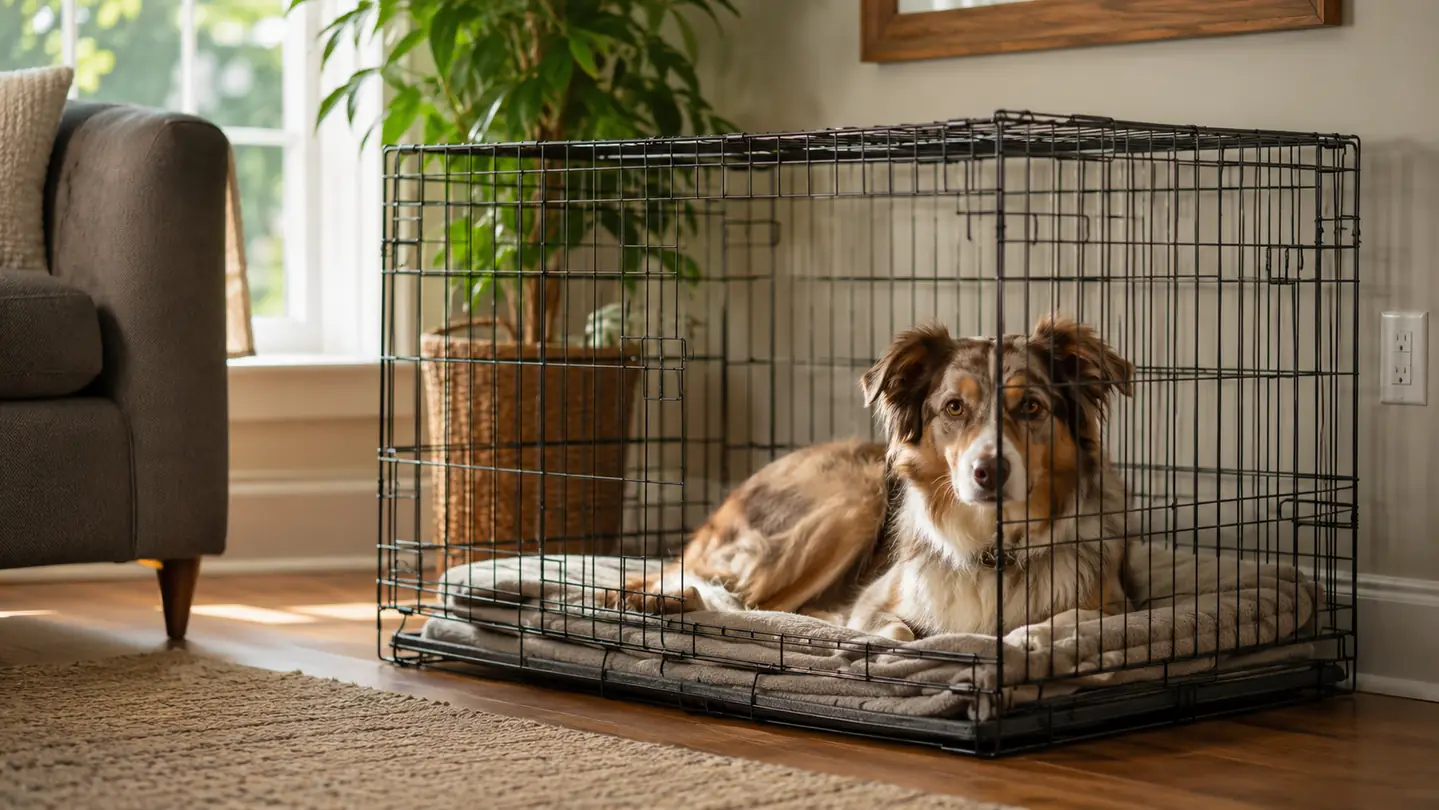
The first crate I brought home for my dog Gus was the cheapest one the pet store stocked. It was a fraction of the price of a proper crate, it folded flat in seconds, and it looked completely fine in the aisle. It lasted three weeks. The latch bent, the door started to sag, and Gus, a 55-pound mixed breed with strong opinions about where he sleeps, figured out he could lean into the door and walk out whenever the mood struck. I found him asleep on my pillow at 2 a.m. three nights running before I admitted the crate was the problem, not the dog.
I replaced it with a MidWest 36-inch iCrate, and a year of daily use later, this is the comparison I wish someone had laid out for me before I spent money on the first one. The budget crate wins on price and on how light it is to carry, and that is honestly about it. If you need a crate for a calm small dog that rides to the vet a few times a year, save your money and buy the cheap one. If your dog lives in a crate for house training, travel, or a safe place to settle, the MidWest is the one that still looks and works like new after twelve months.
| MidWest iCrate | Budget Folding Crate | |
|---|---|---|
| Price | Costs more up front, and the latch and frame earn it | A fraction of the price, fine for light use |
| Build quality | Welded wire, reinforced corners, heavier frame | Thinner wire and pinch-folded corners |
| Door security | Smooth sliding latch a strong dog cannot pop | Hook-and-eye latch that bends under pressure |
| Puppy divider | Divider panel included so a puppy grows into the size | No divider, so a puppy gets too much room too soon |
| Folding and carrying | Folds flat but the frame has real weight to it | Lighter and easier to move from house to car |
| Cleaning | Sturdy slide-out pan that handles regular scrubbing | Thinner tray that can crack and warp |
| Best for | Daily training, strong dogs, puppies, a home base | Occasional trips with a calm small dog |
How I Compared Them
Both crates sat in my house for the better part of a month, which is not how most people shop, but it was the only fair way to compare two things that do the same job. Gus is 55 pounds with a thick chest and a habit of throwing his weight at a door when he wants out. I tested how each latch held up to that, how each crate survived being folded and unfolded every weekend for trips to my sister's place, and how easy each pan was to clean after the usual accidents, muddy paws, and one memorable incident with a stolen ham bone.
I also tried to measure the real jobs instead of the marketing claims. A crate is not just a wire box. It is a house-training tool, a travel carrier, and a den all at once. So I paid attention to how each one handled a puppy growing into it, how square the doors stayed after months of use, and whether the whole thing could survive a strong dog who decides, right at dinner time, that he is done being in a crate. Those are the things that decide whether a crate gets used every day or ends up folded in the garage.
Where the MidWest Wins
Start with the latch, because that is the exact part that broke on my cheap crate. The MidWest uses a smooth sliding bolt that locks the door flush against the frame. After a year of Gus pressing on it every time he heard the mail truck, it still closes clean with one hand and stays shut when he leans on it. The budget crate's hook-and-eye latch is the weak spot on most cheap crates. A determined dog can work it loose, and once the eye bends, the door never hangs right again.
The frame is the quieter difference, and it is the one that shows up over time. The MidWest uses heavier wire with welded corners, so the whole box stays square. A cheap crate is usually held together at the corners by a pinch or a thin clip, and a strong dog pushing on the door can rack the frame out of shape, which is exactly when the door stops lining up. Once that happens on a budget crate, there is no fixing it. The MidWest has not flexed on me once, even when Gus bounces off the door at the sound of the doorbell.
The divider panel is the third thing I would not give up, and it is the one that surprises most people. When Gus was a puppy, I kept the crate shrunk down to his size so he never had room to use one end as a bathroom, which is half of house training right there. As he grew, the panel slid out in a few seconds and the crate grew with him. Budget crates in this price range almost never include a divider, which means you are either buying two crates or fighting the house-training setback that comes from handing a puppy more space than he can handle.
Where the Cheap Crate Wins
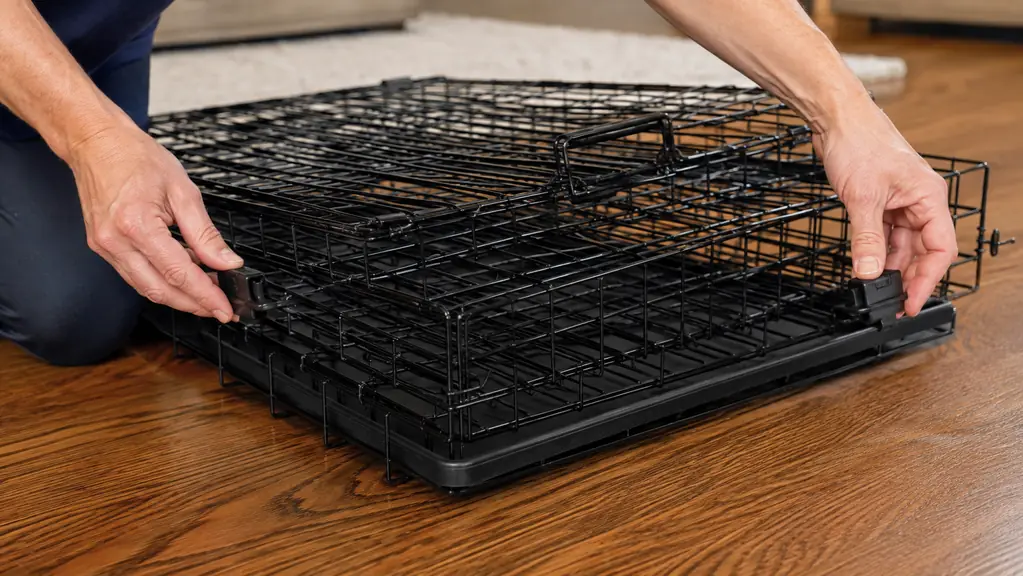
I want to be fair here, because the budget crate is not a bad product for everyone, and it wins two real points. The first is weight. The MidWest 36-inch is a solid piece of steel, which is exactly what you want in a home crate, but I would not want to hike it through an airport with a dog under the other arm. The budget crate is noticeably lighter and easier to fold and toss into the back of the car. For people who only need a crate for travel, that portability is the entire job, and the cheap one does it better.
The second honest win is price, and I will not wave it away. A budget folding crate costs a fraction of the MidWest, and for a small, calm dog that never tests the door, it will do the job for years. I know people who keep a cheap folding crate in the car full time for vet runs and weekend visits, and leave a sturdy crate at home as the daily den. That is a completely reasonable setup. The budget crate only becomes a bad deal when you ask it to do real work, contain a strong dog, or survive a puppy's teething months.
The latch bent, the door sagged, and Gus walked out whenever the mood struck. That is how most cheap crate stories end.
The crate I'd buy again tomorrow
If your dog is going to live in this crate for training, travel, or a daily den, buy the one that is built for it. After a year of hard use, my MidWest still latches clean and folds flat.
Amazon Check Today's Price on Amazon →The Sizing Trap
The other thing worth spelling out is size, because it trips up more people than build quality. This MidWest is the 36-inch model, which is rated for dogs around 41 to 70 pounds. Gus at 55 pounds has room to stand up, turn around, and lie down flat, which is the rule for a proper crate fit. If you buy too small, the dog is cramped and miserable. If you buy too big, a puppy gets enough room to turn one corner into a bathroom, and you have handed yourself a house-training problem.
Cheap crates come in the same nominal sizes, but the wire spacing and the actual interior room vary a lot between brands, so a 36-inch cheap crate is not necessarily the same size as a 36-inch MidWest. My advice is to measure your dog from nose to tail and add a few inches, then check the interior dimensions of the specific crate before you order. A crate that is the right size for the dog is comfortable. A crate that is the right size on paper but tight in practice gets avoided, and a crate the dog refuses to use helps nobody.
The Cleaning Factor
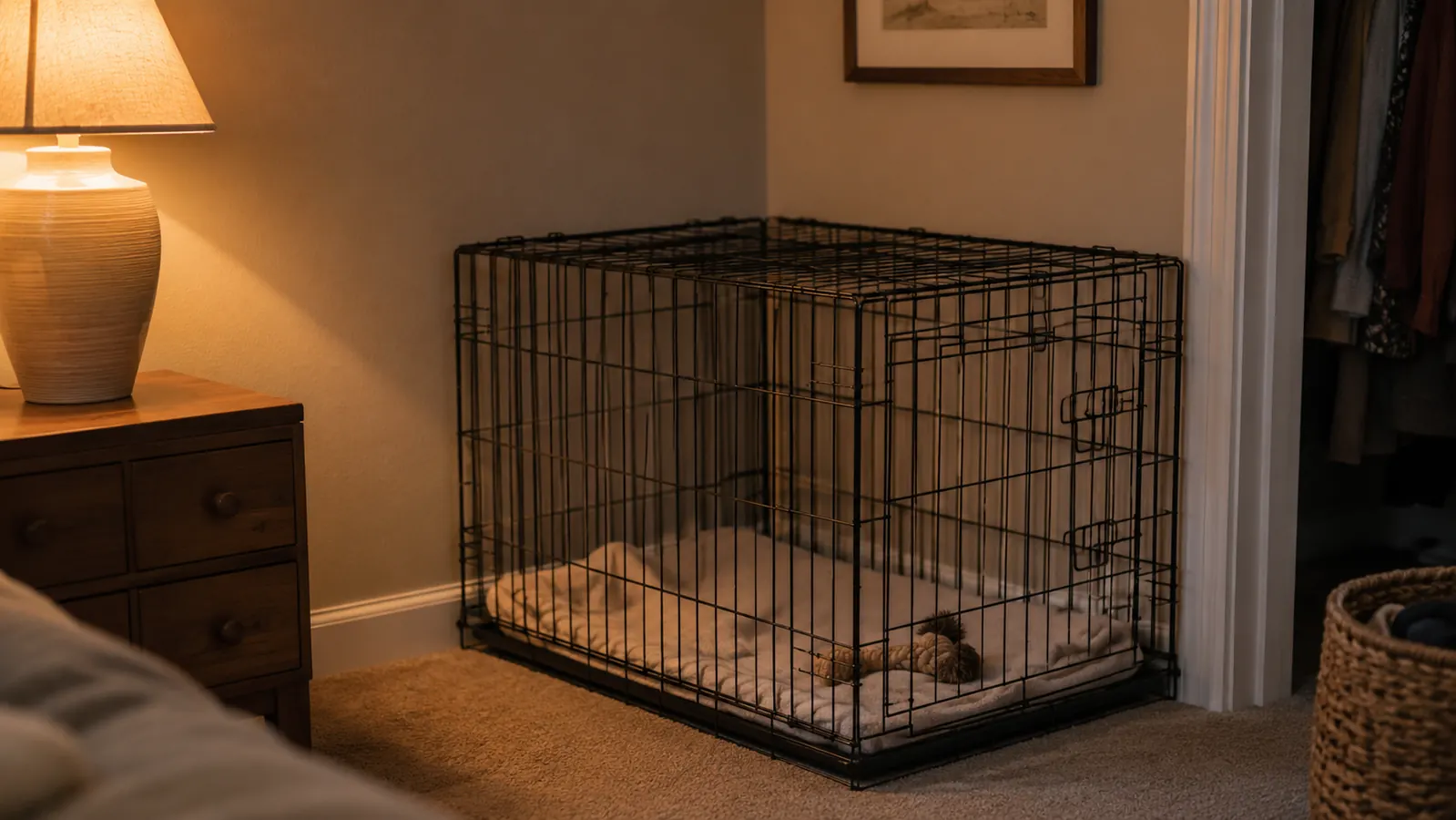
The floor pan is the part of a crate nobody thinks about until the first accident, and it is where the two crates differ more than you would guess. The MidWest has a sturdy slide-out pan that handles a scrub brush and hot soapy water without warping. The pan on the budget crate was thinner, and after a few months of regular washing one corner cracked clean through. Once a pan cracks, every spill runs out onto your floor, and cleaning a crate with a broken tray becomes a misery that makes you resent the whole thing.
I clean Gus's crate about once a week, and the pan alone was enough to notice the difference. The MidWest tray slides out in a second, I take it to the sink, scrub it, dry it, and slide it back into place. The budget tray stuck, it flexed under the brush, and it never quite seated flat again after the crack appeared. If your dog is still in the house-training phase or has any kind of stomach issue, the pan is not a detail. It is the part of the crate you will touch more than any other, and a cheap one makes that chore worse every single week.
The Cost Question
The honest math is not as one-sided as it looks. A budget crate is cheaper on day one, but if a strong dog bends the latch in a month, you are buying another one, and now you have spent nearly as much as the MidWest cost in the first place. My cheap crate lasted three weeks. The MidWest has gone twelve months with zero problems, and I expect it to outlive Gus. When a product fails that fast, the cheap price is not a discount, it is a rental.
None of that matters if the crate only has to do light duty. For a calm small dog that rides to the vet a few times a year, a budget crate may well last a decade, and it is the smarter buy. The cost question only flips in favor of the MidWest when the dog actually tests the crate, which is exactly the situation where you cannot afford for it to fail. Match the crate to the dog and the job, and you do not waste money either way.
Who Should Buy Which
Buy the MidWest if you are crate training a puppy, if your dog is over 40 pounds and likes to push on things, or if the crate is going to live in your house as a daily space. That is the majority of people reading this, and for them the extra money is not a luxury. It is the difference between a crate that lasts a decade and one that has to be replaced after a month. The divider panel alone is worth a good chunk of the difference for anyone with a growing puppy.
Buy the budget folding crate if you need something occasional, if your dog is small and calm and has never once shown interest in escaping, or if the crate will live in the car rather than the house. And if you are still not sure, think about the crate the way you would a car seat. It is a piece of safety equipment for a dog, whether it is keeping a puppy out of trouble at night or keeping a strong dog from bolting out the front door. That framing is what finally got me to stop cheaping out, and a year later I have not regretted it once.
The short version: buy it once
The MidWest iCrate is the crate I replaced the cheap one with, and it is the one I would buy again. If your dog is going to live in this crate, check today's price and see which size fits.
Amazon Check Today's Price on Amazon →