
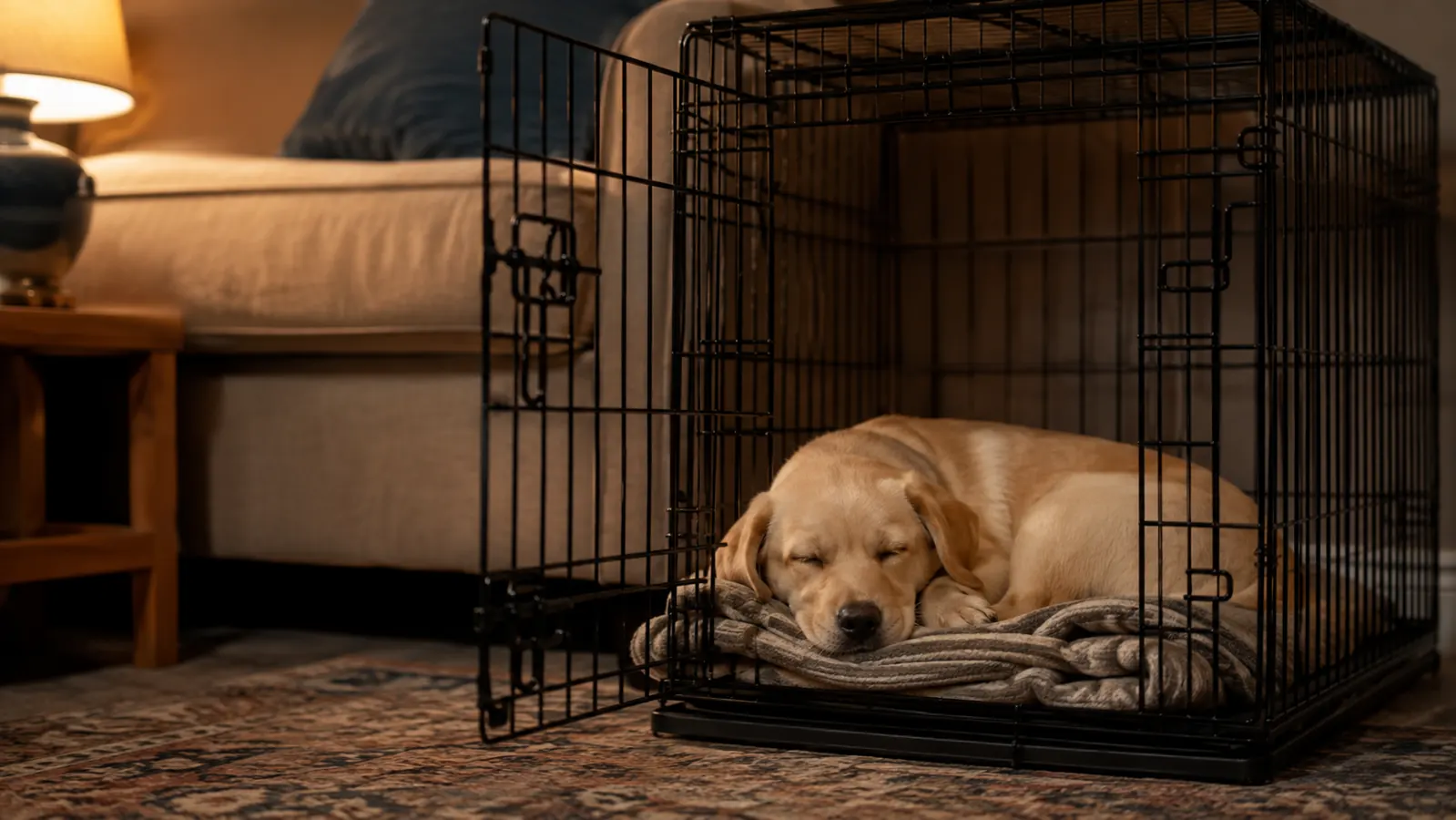
The first night Rusty came home I knew we were in for it. He was a 9-week-old yellow Lab, 18 lbs of legs and teeth, and when the lights went out he treated the bedroom like his own personal racetrack. He cried, he barked, he dragged his bed in circles, and by 2 AM I was standing in the dark in my bathrobe wondering what I had signed up for. I had read every puppy book on the shelf, and the same answer came up in all of them: get a sturdy crate, get one with a divider, and make it the right size. The name that kept coming up from trainers and friends alike was MidWest, so that is where I started.
We still tried the usual things first. We let him sleep in the bed, which meant nobody slept. We closed the bedroom door, which made him cry harder. Then I bought a cheap wire crate from the big-box store, the kind that arrives twisted and takes forty minutes to fold into shape, and it shook every time he flopped over. The latch slipped twice in the first week and he let himself out at 3 in the morning, which is a special kind of defeat when you have to be at work by seven. That crate ended up in the garage, and I ordered the MidWest iCrate that the trainers kept talking about.
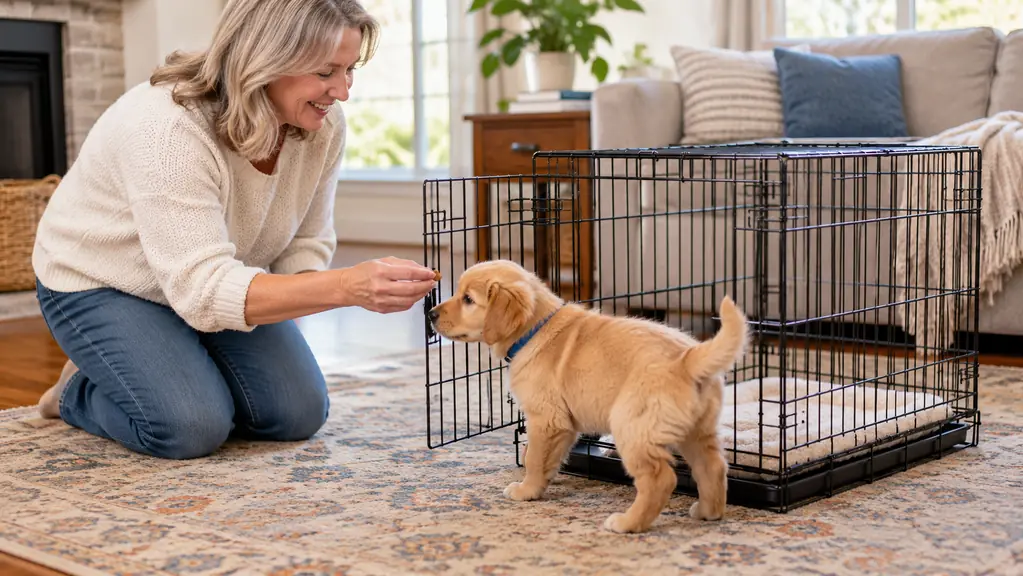
The iCrate arrived flat in a box and folded open in about fifteen seconds, no tools, and it did not feel like a toy. The welds are clean, the corners are rounded, and the door has a sliding latch that a puppy nose cannot work. But the part that changed everything is the divider panel, a metal wall that clips across the inside so you can shrink the crate to match the puppy's current size. That is a feature I had never heard of, and it turned out to be the whole ballgame.
Here is the part I did not understand at first. A crate that is too big gives a puppy a bedroom and a bathroom in one, and a puppy will use the far corner as the bathroom, because dogs do not soil the place they sleep. Shrink the space down to just enough for the dog to stand up, turn around, and lie down, and the puppy's own instinct does the rest. He keeps his bed clean because it is all his bed. The divider made the crate a den instead of a ballroom, and Rusty started treating it that way.
The divider made the training simple, but the routine was what made it stick. We fed Rusty on a schedule, took him out every couple of hours, and made the crate the place where good things happened. His meals went in there with the door open, then his favorite chew, then a handful of kibble scattered on the floor of the crate. He learned to trot in on his own and wait for the latch, and that was the first time I felt like we were actually getting somewhere.
Rusty stopped crying the third night once the divider made the crate a den instead of a ballroom. He has not had a single accident in his crate since he was eleven weeks old.
Give your puppy a den, not a ballroom.
The MidWest 36-inch single door iCrate with its divider panel is the crate that finally made our nights calm. It folds open in seconds, grows with a puppy, and holds a full-grown Lab without a wobble.
Amazon Check Today's Price on Amazon →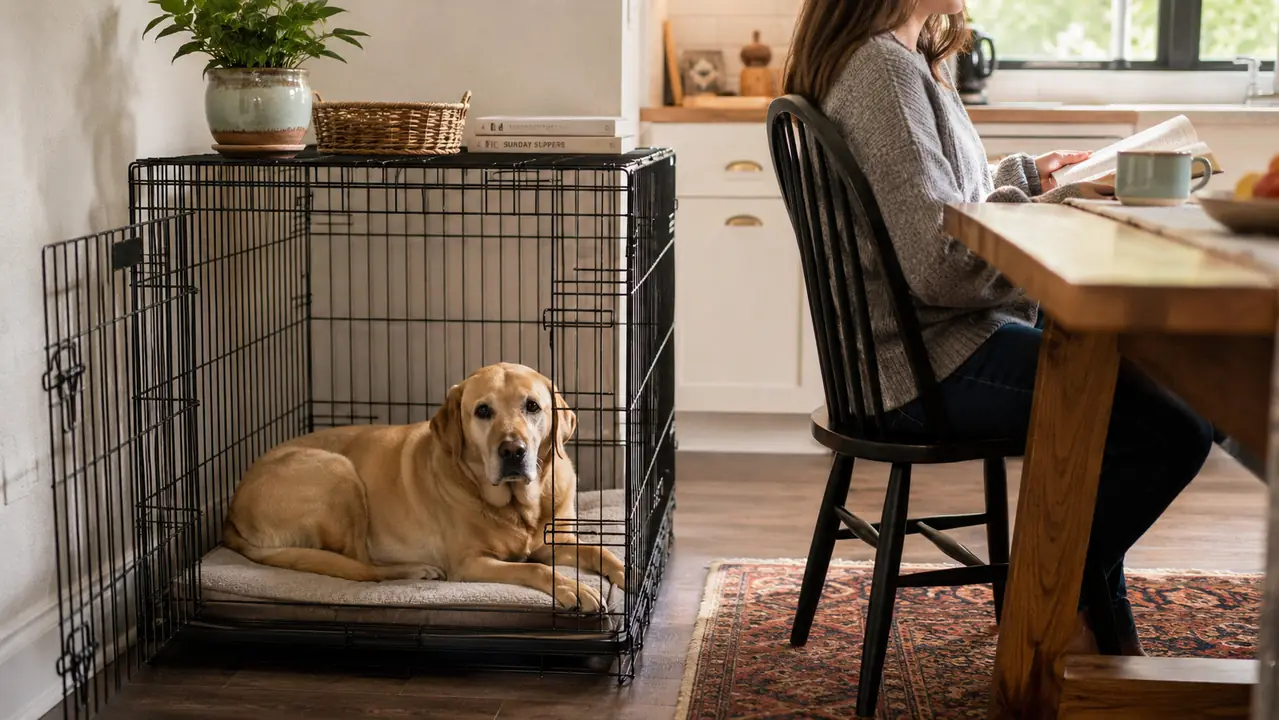
Those first two weeks were the hardest, and I want to be honest about that. There were nights when he cried for twenty minutes, and the advice I kept hearing was right: you cannot let them out when they are carrying on, or you teach them that crying opens the door. So we sat on the floor beside the crate with a hand through the wire until he settled. By the third week he was walking into the crate on his own at bedtime and curling up without a sound, and I nearly cried with relief.
Now that Rusty is eight months old and close to 55 lbs, the divider is long gone and he has the full 36 inches. The crate has been knocked, shoved, jumped on, and dragged halfway across the kitchen, and the frame is still square. It folds flat when we need the floor space, and it rides in the back of the SUV when we visit my sister, which is something the cheap crate could never have done. That folding feature earns its keep more than I expected.
I will not tell you a crate solves every puppy problem. Rusty still chewed a corner of the couch and stole a sock the day we took the divider out, and no piece of wire is going to fix a teenager in a dog suit. But the crate gave us something we did not have before: a place where he is calm on his own, and a full night's sleep for the people who live with him. That is worth more to me than any training gadget.
What I'd Tell You If We Were Sitting at My Kitchen Table
If we were sitting at my kitchen table I would say it this way. If your puppy will not settle, and you are losing sleep, and you have already tried the cheap crate, do yourself a favor and get a real one with a divider. Set the size so it fits the puppy today, not the dog he will be next year. Feed him in there, take him out on a schedule, and do not let him out mid-cry. The MidWest iCrate is not fancy. It is just solid, it folds flat, and the divider makes crate training something you can actually do instead of a battle you lose every night. Rusty sleeps through till morning now, and so do we.
The crate that gave us our nights back.
The MidWest 36-inch single door iCrate is the exact one Rusty grew up in. If your puppy will not settle, this is the solid, folding crate with a divider that makes training click.
Amazon Check Today's Price on Amazon →