
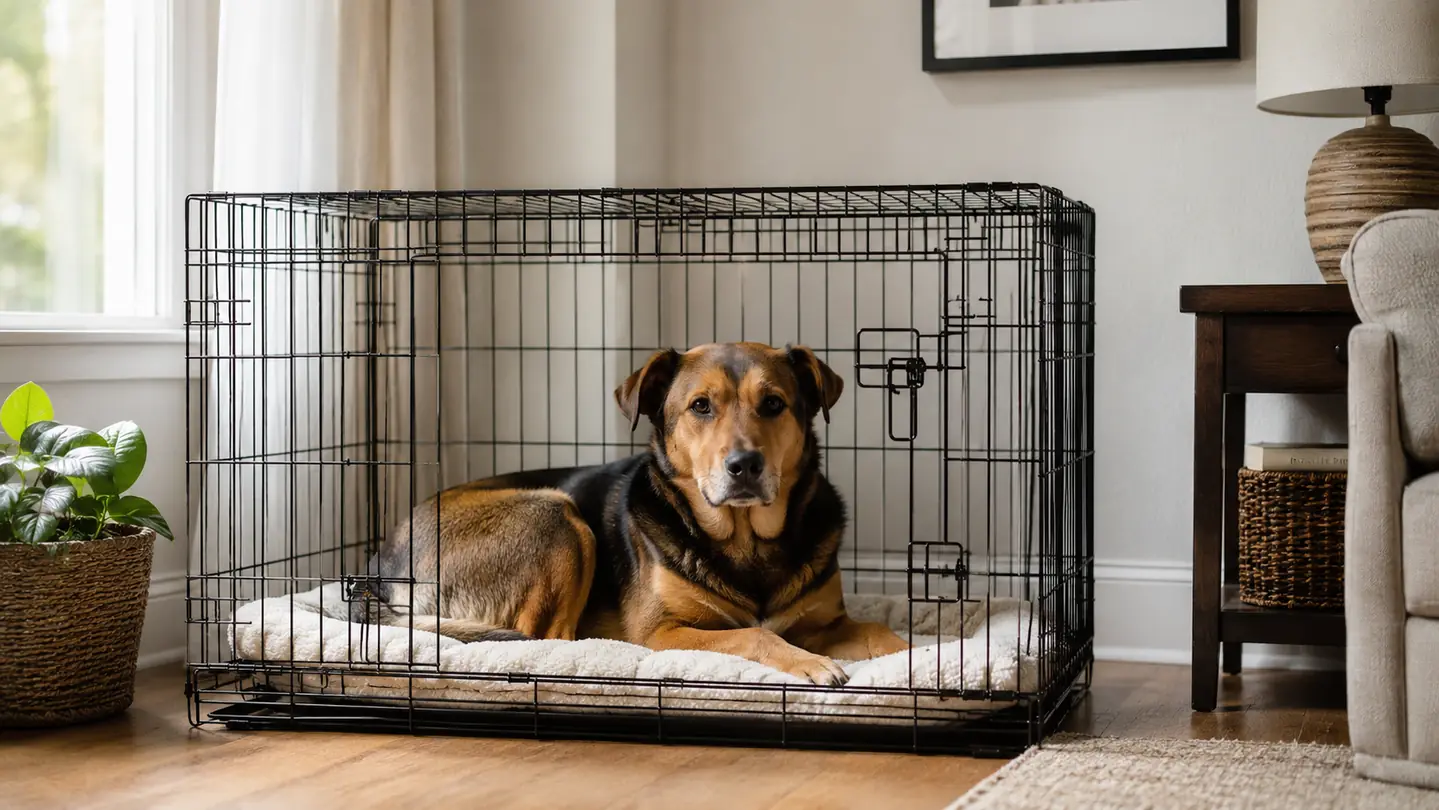
I'll be honest with you up front: I almost sent this crate back. Not because it was damaged, and not because my dog hated it, but because I ordered the wrong size and spent a week convinced I had wasted my money. The Midwest iCrate is a good crate. It is also a crate you can very easily buy in the wrong size, and that is the thing most reviews skip. So let me start there, with the part that almost cost me a return.
I am a practical pet owner, not a trainer and not a show handler. My dog Roscoe is a 60-pound Lab mix we brought home from a shelter two years ago. He came with separation anxiety, a chewing habit, and no idea how to settle. The crate has been part of our routine for about a year now, and this is the honest review I wish I had read before I clicked buy.
The Quick Verdict
A sturdy folding crate at a fair price, but measure your dog first, and know the latch is not escape-proof for a determined chewer.
Amazon Check Today's Price →The Midwest 36-Inch iCrate at Today's Price
Before you order, measure your dog from nose to tail and add four inches. When the size is right, this crate is the best value in its class.
Amazon Check Today's Price on Amazon →How I've Used It
Roscoe came home at 55 pounds and 11 months old, all legs and nerves. The first crate I tried was a flimsy wire model from a big-box store, and he popped the door open on night three. The Midwest iCrate arrived a week later, and I spent the first afternoon just getting it out of the box and standing it up.
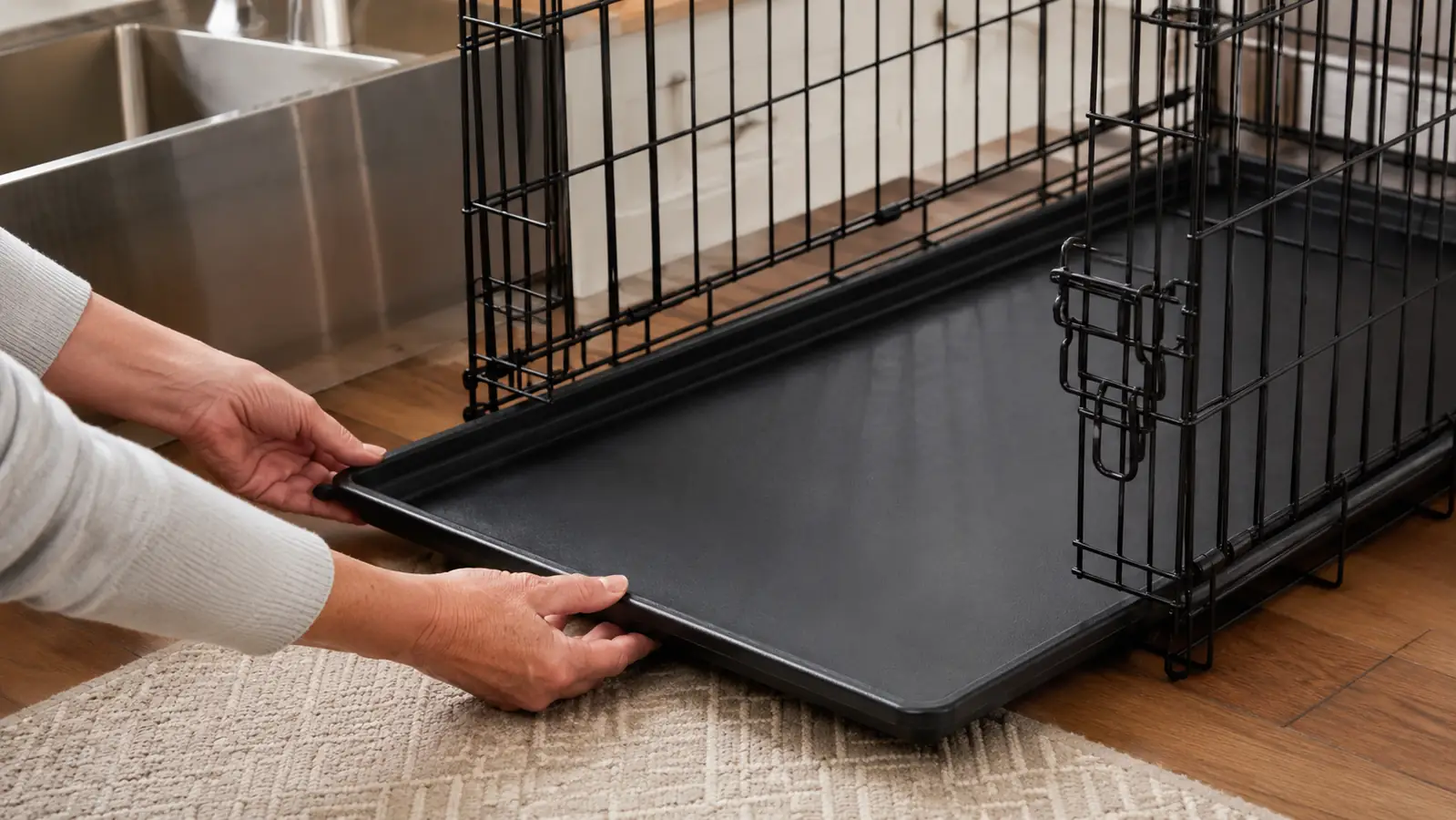
The folding mechanism is genuinely simple. It unfolds into shape, the panels snap straight, and the door swings on its hinges. No tools for the main frame. You slide the plastic tray into the bottom, raise the door, and set the latch. That was the whole setup, about ten minutes with my wife holding one side while I squared the panels.
Since then it has been used daily. Roscoe sleeps in it at night, rides in it in the car a couple of times a month, and gets folded flat and carried to my parents' house on holidays. It has also survived a solid year of a 60-pound dog throwing himself against the door during the first weeks of training.
The Sizing Question Nobody Answers
Here is the honest part. The 36-inch size is advertised for dogs 41 to 70 pounds, and Roscoe at 60 pounds fits, but it is not roomy. A crate should let your dog stand up, turn around, and lie down flat. The 36-inch does that for a 60-pound dog with a couple of inches to spare. A dog at the top of that weight range, or a long-backed dog, will be cramped.
The rule I wish someone had told me: measure from the tip of the nose to the base of the tail, add four inches, and that is the crate length you want. The 36-inch iCrate gives you about 36 inches of floor length. A dog that measures 32 inches nose to tail fits with room to spare. A dog that measures 35 inches does not, and that is where the return starts.
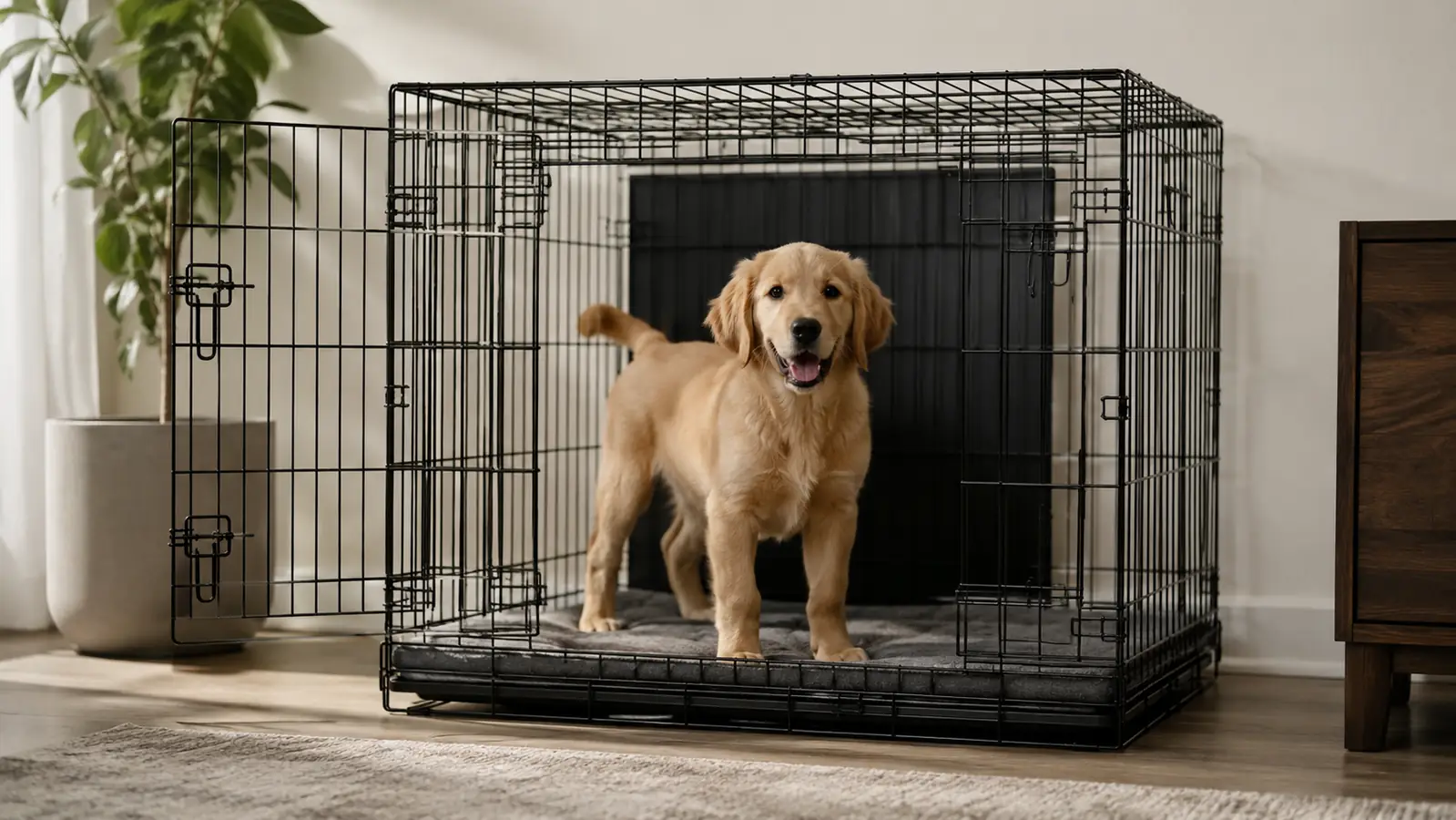
If you are buying for a puppy, the divider panel matters more than the total size. The iCrate comes with a metal divider that pins into the back and shrinks the floor space as the puppy grows. We used it for the first three months to keep Roscoe from using one end as a bathroom and the other as a bedroom. As he grew, we moved the divider back a notch at a time, then took it out entirely.
The divider also made the first month of crate training easier than I expected. We set it so Roscoe could only lie down, not pace, and we kept the crate in our bedroom at night so it felt like part of the pack. By the end of week two he was walking in when he was tired. A divider that grows with the dog is why I would buy this crate for a puppy instead of a cheaper one that has to be replaced.
What the Build Quality Is Actually Like
The frame is welded wire, and the welds on our crate are clean. No sharp edges where the bars meet, no paint flaking after a year, no rattle when the dog moves around. The wire gauge feels solid when you push on a side panel, and the whole crate has a little flex without the cheap wobble of the big-box model I started with.
The plastic tray slides in and out of the bottom, which makes it easy to wipe down, and it has held up to nightly use without cracking. It does scratch. After a year of dog nails and the occasional rubber bone dragged across it, the tray shows scuffs. Nothing has broken, and it still slides out cleanly for a wash in the sink.
The one place I would call out is the feet. The crate sits on four small plastic caps, and they are fine on carpet and hardwood. On tile they can slide a little when a dog throws his weight around. A rug under the crate fixes it in about three seconds, but it is worth knowing before you set it up in the kitchen.
One thing a year of ownership surfaces: the crate will not stay perfectly square forever. After months of folding and unfolding, the top bars sit a little looser, and the door needs a small nudge to align when you drop it. It is a minor quirk, not a failure, and it has not affected the strength of the crate once. But it is the kind of detail a first-week review cannot catch.
The Door and Latch, Up Close
The single door is roughly 19 inches wide and 21 inches tall, and it swings down on two bottom hinges like a ramp. I actually use it that way for Roscoe, since he is older and prefers to step in rather than hop. The door also lifts off its pins entirely, which makes a wide open entry when the crate is not in use.
The latch is the part I have complicated feelings about. It is a simple thumb slide that lifts and swings out of the way. For a calm dog it is plenty, and a 60-pound dog cannot push it open from the inside. But it is not a lock. A determined dog that can work a latch, or reach it from the outside, can learn it.
If you need real escape-proofing, add a carabiner through the latch hole. It costs about two dollars at any hardware store and turns the door into a closed loop that no paw can reach. I added one for the first month of training and still use it when Roscoe is in the crate unsupervised. That small add-on solved the one weakness the reviews never mention.
One surprise: the latch clicks loudly, and that click actually helped us. During training, Roscoe learned that the sound meant settle time, so he would stop pacing and lie down. It is a small thing, but it is the kind of detail that makes an honest review different from a spec sheet.
Daily Use: What Holds Up and What Doesn't
After a year, the crate looks used but not worn. The coated wire has a few nicks where Roscoe dragged a bone against the bars, but no rust. The tray is scuffed, as I said. The hinges and the latch are as tight as the day I unfolded it, and folding it flat takes about thirty seconds once you learn the pinch point on the top bar. It is noisier than I expected at night, because a 60-pound dog shifting on the plastic tray makes a soft clatter on the floor, but a mat or a rug under the crate fixes that.
The things that wear out are the things you add, not the crate itself. The crate mat gets chewed. The blanket gets washed. The water bowl gets knocked over. The crate is the most durable piece of dog gear I own, and I am someone who has gone through two beds and three leashes in the same year.
What does not hold up is the crate as an all-day confinement pen. It is a crate, not a kennel. If you need a dog contained for eight hours while you are at work, a plastic airline-style kennel gives a more den-like feel and a sturdier door. For overnight sleeping, car rides, and short stretches during the day, the iCrate is excellent.
Cleaning is easier than most pet gear I own. The tray slides out, I rinse it in the sink with warm water and dish soap, and it air dries in minutes. The wire frame gets a once-over with a damp cloth during the weekly wipe-down. The one chore you cannot skip is the tray seam, where kibble crumbs and fur collect and start to smell if you leave them. A quick swipe with a paper towel when you fill the water bowl handles it.
Alternatives I Considered
I looked at the two-door version of the same crate, and if your crate sits against a wall, the two-door model is worth the extra few dollars because you can open either side. I also compared it to a plastic airline kennel, which is better for a nervous dog that wants a dark, smaller space, and worse for a hot day in the car since plastic does not breathe like wire.
For a cheap crate, I already had the answer from experience. The big-box wire crate I started with cost about half as much and lasted three nights before the door popped. The Midwest is more than twice the money in some cases, and the difference is the door hinge, the latch, and the welded frame. You are paying for the part that does not bend the first time a strong dog leans on it.
I will also say the Midwest is heavier than it looks. At roughly 25 pounds for the 36-inch, it is not a crate you want to carry through an airport, but it is fine for the car and for moving between rooms. If portability matters more than anything else, a soft-sided crate folds lighter, though it will not survive a chewer the way this one does.
What I Liked
- Folds flat in seconds and sets up without tools
- Welded wire frame with no sharp edges
- Divider panel lets a puppy grow into it
- Tray slides out and wipes clean
- Solid latch for the money, with a carabiner loop for real security
Where It Falls Short
- Sizing runs snug for dogs at the top of the weight range
- Latch is not truly escape-proof
- Plastic tray scratches with heavy use
- Plastic feet slide a little on tile
- Single door limits placement options
A crate should let your dog stand up, turn around, and lie down flat. Measure first, and the 36-inch iCrate fits a 60-pound dog with a couple of inches to spare.
Who This Is For
You are the right owner for the Midwest iCrate if you want a sturdy, portable crate for a medium to large dog that sleeps in it at night, rides in it in the car, and is left alone for short stretches. It is also the right crate for a puppy, because the divider grows with the dog and you will not buy a second crate. If you are house training a pup or settling a rescue, this is the crate I would buy again.
It also suits a household that moves the crate around, because folding it flat and carrying it takes seconds. And it suits someone who reads reviews, compares prices, and wants the one crate that will not need replacing next year. That is the practical, budget-conscious version of me, and this is the crate that matched it.
If you are about to start crate training, expect the first week to be work. Roscoe saw the crate as a trap at first, so we fed every meal inside it with the door open, tossed treats in through the wire, and left the door off its pins for two days. By day five he was walking in on his own to nap. The crate did its job, but the crate alone is not the training.
Who Should Skip It
Skip it if you need a crate for a dog that can reach the latch and is determined to escape, or a chewer that will work at the wire for hours. The latch is good, but it is not a lock. Skip it if your dog is at the top of the 70-pound line or long in the back, because the 36-inch will be tight and the next size up will fit better.
And if you plan to leave a dog contained for a full workday, consider a plastic kennel instead. It gives a calmer, darker den and a door with nothing to grip. The Midwest iCrate is a great everyday crate, but it is not the right tool for every job, and an honest review has to say where it stops being the answer.
So would I buy it again? Yes, and I would order the same 36-inch size, this time measuring Roscoe first. It is not a perfect crate, and I have named the flaws: the latch, the snug sizing, the sliding feet. But for a sturdy, portable, buy-it-once home for a medium to large dog, it is the honest answer. That is the review I wanted, and I hope it saves you the return I nearly made.
The Midwest iCrate Done Right
Measure your dog, pick the size that leaves four extra inches, and this is a buy-it-once crate. For Roscoe at 60 pounds, the 36-inch has been the most dependable piece of gear in the house.
Amazon Check Today's Price on Amazon →