
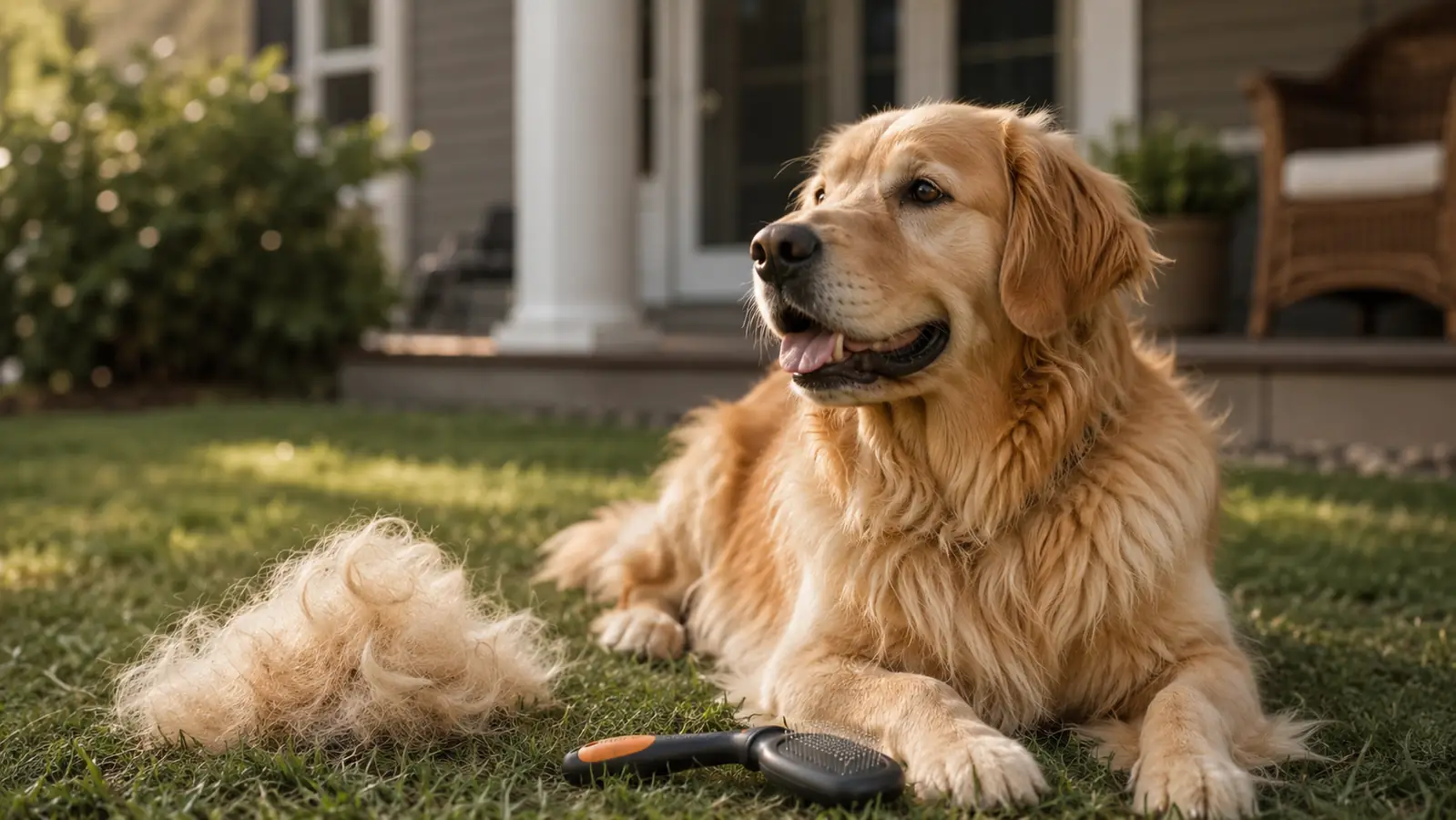
If you live with a long-haired dog, you already know the exact moment I am talking about. You sit down on the couch, reach for the remote, and come up holding a fistful of loose fur. The shedding never really stops. It just moves around the house: the couch, the rugs, the back seat of the car, the lint trap. I lived with that for years with my 9-year-old Golden Retriever, Gus, and I tried every brush the pet store had. None of them touched the real problem.
The real problem is the undercoat. A dog like Gus carries two layers of hair: a soft, dense undercoat that insulates him, and a longer, coarser topcoat. When the seasons change, the undercoat loosens and dies off in clumps. A regular brush only skims the top, so the dead undercoat stays trapped underneath and ends up on your floor every time he shakes. The tool that finally fixed this for me is the FURminator Dog DeShedding Tool. After six months of weekly use, it is the one grooming purchase I would make again without hesitating.
The FURminator Pulls the Loose Undercoat Before It Hits Your Floor
This is the deshedding tool I reach for with Gus every week. It reaches the dead undercoat a regular brush cannot touch and pulls the loose hair out at the base, so it ends up in the trash instead of on your couch.
Amazon Check Today's Price on Amazon →Why the FURminator Gets the Hair a Regular Brush Can't
The trick is the stainless steel deshedding edge. Instead of sitting on top of the coat like a normal brush, that edge reaches down through the topcoat and grabs the loose undercoat hairs at the base. One pass pulls out dozens of hairs that a brush would have simply pushed around. The first time I used it on Gus, I filled a surprisingly large pile of fur in about ten minutes. It honestly looked like I had groomed a second dog.
That is not an exaggeration, and it is exactly why the FURminator carries a 4.7-star average across more than thirteen thousand reviews. It is not a magic wand. It will not stop your dog from shedding altogether, and you would not want it to. Shedding is how a double-coated dog turns over its coat. What the tool does is pull the loose fur out while it is still on the dog, so it ends up in your hand instead of on your furniture. In my house that cut the fur on the floors by a good two-thirds during peak shedding season.
Pick the Right FURminator for Your Dog's Coat
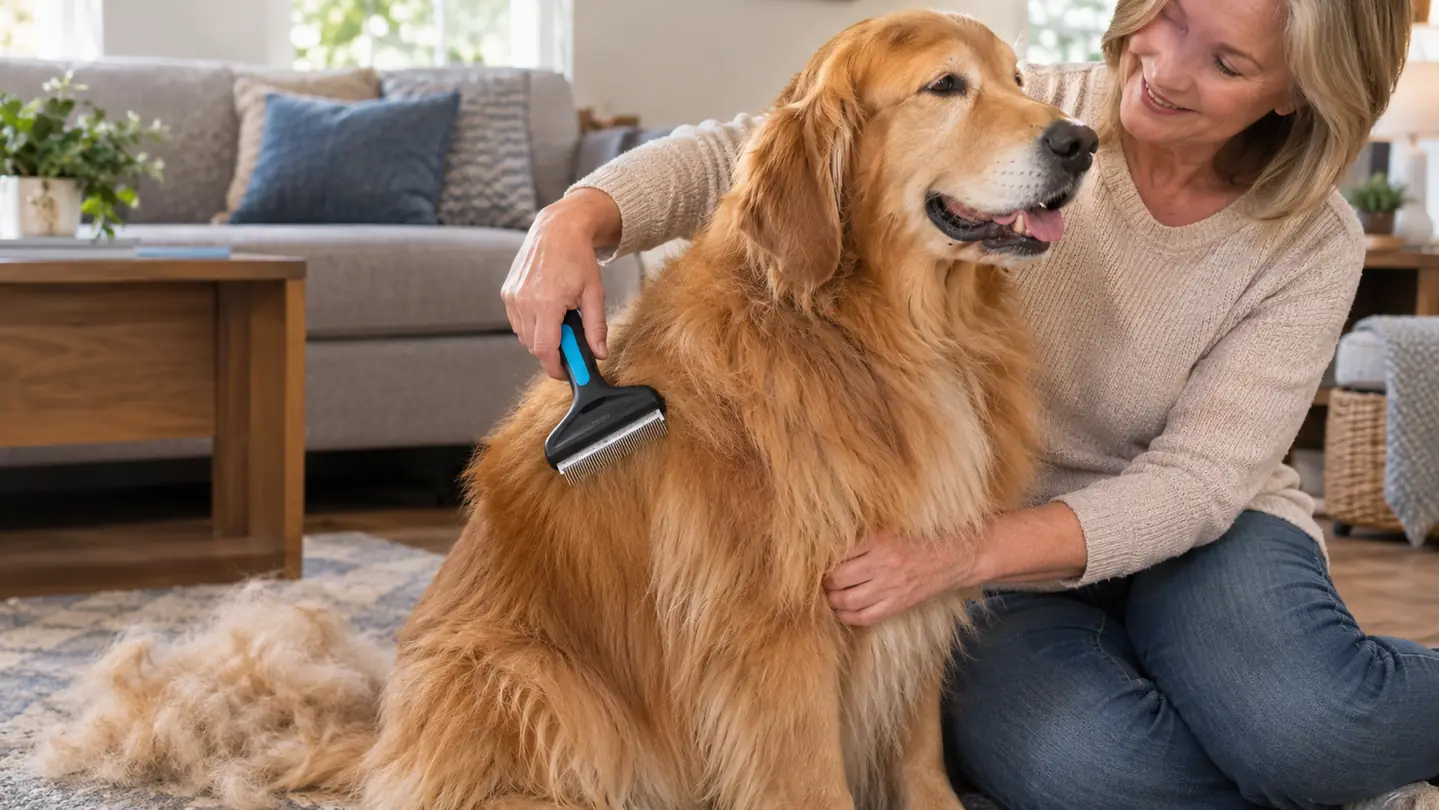
The FURminator comes in a few sizes and coat types, and the version matters. I use the large, long-hair model because Gus has a heavy double coat with long guard hairs. The long-hair version has a slightly deeper edge that reaches through that longer topcoat. If your dog has a short coat like a Lab or a Beagle, the short-hair version is the one to reach for. Picking the right one is the difference between a tool that glides and a tool that fights you.
Sizing follows your dog's weight as much as their coat. The large version suits bigger dogs, and the small version works for dogs under about 30 pounds. Getting the size wrong is not a disaster, but it makes the job harder. A tool that is too small takes twice as long on a big dog, and a tool that is too large is awkward to control on a small one. Match the size to your dog and the coat type to their fur, and the technique below gets much easier.
Step 1: Get the Tangles and Mats Out First
Before the FURminator ever touches your dog, run a slicker brush or a wide-tooth comb through the coat. This is the step people skip, and it is the reason some owners decide the tool does not work. If your dog has mats or tangles, the deshedding edge catches on them, pulls, and makes your dog want to leave the room. Gus gets a five-minute brush-over on his haunches, his chest, and behind his ears before we start.
Work in small sections and be patient around the sensitive spots. The belly, the backs of the legs, and the tail are where Gus is most twitchy, so I go slowly there. The point of this first pass is not to remove fur. It is to make sure the coat is smooth so the FURminator can glide through without tugging. A calm, tangle-free start keeps the whole session pleasant for both of you.
Step 2: Work in Sections, Going with the Coat
Hold the FURminator at a comfortable angle and work in the direction the hair grows. Do not scrub back and forth like you are washing a car. Long, smooth strokes in one direction let the edge reach down to the undercoat and pull the loose hair out cleanly. I start at Gus's shoulders, work down his back in a straight line, then move to his sides, one section at a time.
Sections matter more than speed. I part the coat with my free hand and cover about a palm-width of skin at a time, so I know I have actually hit each spot instead of gliding over the same patch twice. On a large dog with a heavy coat like Gus, a full pass takes ten to fifteen minutes. It should feel productive, not like you are rushing to be done.
Pay extra attention to the places where the undercoat builds up thickest. On Gus those are his hindquarters, his ruff, and the backs of his thighs, the spots where tufts of loose fur stick out and catch on everything. I give each of those an extra pass while I am in the section anyway, since that is where the biggest piles come from. A minute spent there saves an afternoon of vacuuming.
Step 3: Keep the Pressure Light
This is the technique tip that makes or breaks the whole routine. The FURminator does not need you to press down. The edge is designed to do the work on its own. Press too hard and you risk irritating your dog's skin, especially on a long-haired dog where the skin sits under a thick layer of coat. I use about as much pressure as I would use to pet Gus firmly.
If you are not sure you are doing it right, listen to your dog. A relaxed dog will stand or lie still while you work. If Gus starts to pull away, lick his lips, or look back at me, I back off the pressure and slow down. A light touch also protects the topcoat. You want to remove the dead undercoat, not shave away the healthy guard hairs that shield his skin from sun and weather.
Step 4: Tie the Bath into Your Routine
The single biggest improvement came when I stopped treating the bath and the deshedding as separate chores. Here is the order that works best for us. Deshed Gus thoroughly before the bath to pull out the loose undercoat, bathe him, dry him completely, then finish with a lighter second pass. The bath loosens more dead hair, and that final pass catches what the water released.
Drying matters more than people expect. I let Gus air dry, towel him, and only then pick up the FURminator again. Working on a completely dry coat gives the edge the traction it needs to grab the loose hairs. I run the second pass over the same sections I did the first time, and the pile is always much smaller. That second pile is the hair that would have ended up on your floor over the next week.
Step 5: Know When to Stop and How Often to Repeat
There is a right place to stop, and it is before you get every last hair. The FURminator should never pull live, healthy hair. When the edge starts coming up mostly empty and your dog's coat looks smooth and even, you are done. For Gus that is about two passes over his whole body during peak shedding. If you keep going past that point, you are just scraping his skin for no benefit.
As for how often, I settle into once a week during the heavy shedding months and every two to three weeks the rest of the year. The two big blowouts for a double-coated dog like Gus are spring and fall, when the undercoat turns over. Those are the weeks I bump him up to every few days. A consistent routine keeps the loose fur from piling up, which means less hair on the couch and less to vacuum.
What Else Helps
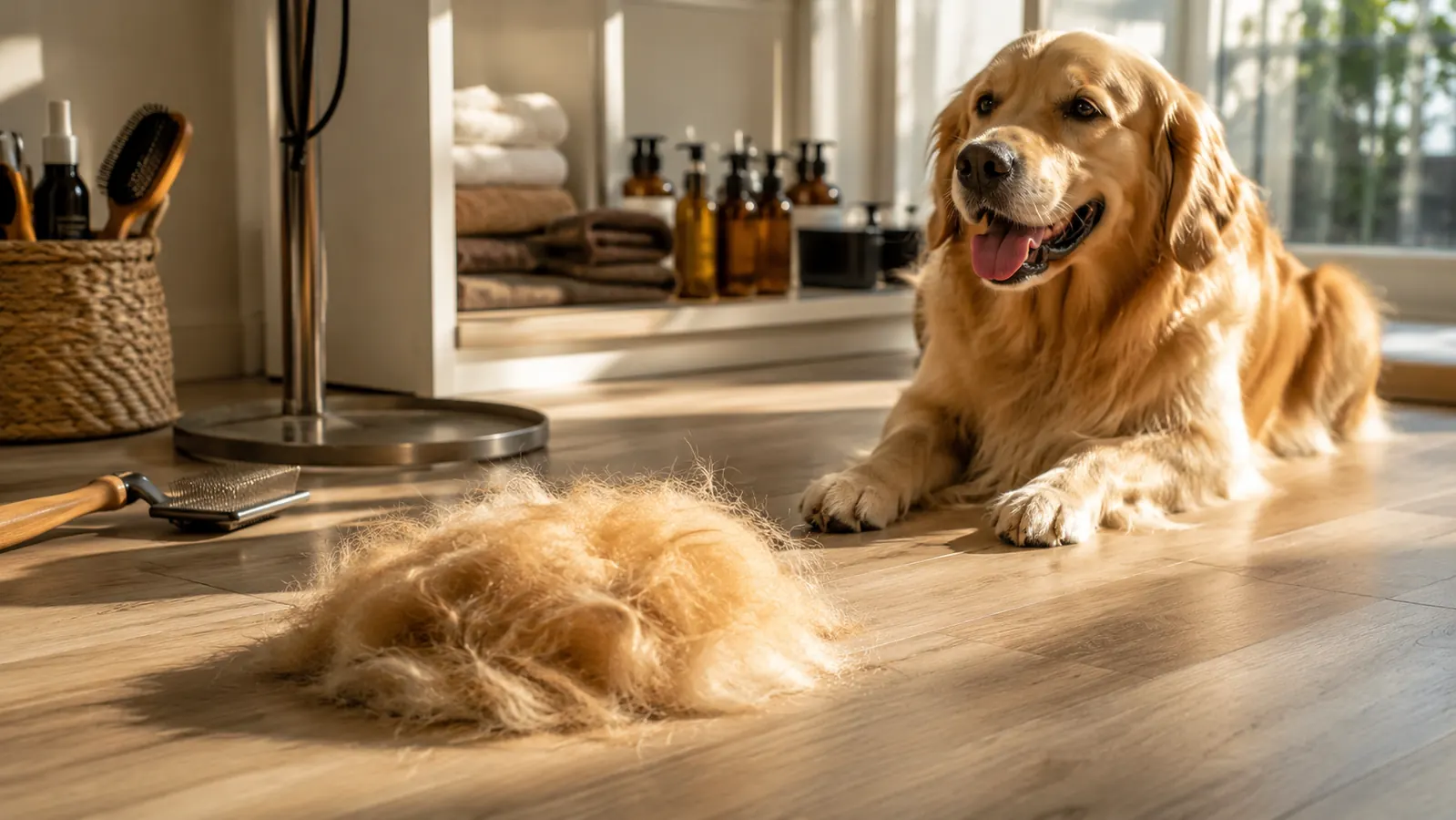
The FURminator does the heavy lifting, but a few cheap habits make it work even better. A dog shampoo with oatmeal helps keep the skin and coat healthy, which means less abnormal shedding. A rubber curry brush in the shower lifts loose hair the deshedding tool missed. And I keep a lint roller by the front door for the ten seconds of fur that still finds its way onto my clothes no matter what I do.
Food matters too. When I switched Gus to a food with more omega fatty acids, his coat looked glossier and the hair he did shed seemed to stay on him longer. It is not a substitute for grooming. Nothing replaces actually pulling the dead undercoat out. But a healthy coat sheds less, and the FURminator has an easier time with a coat that is already in good shape.
Do not forget the tail and the feathering on the legs. Those long, silky areas shed just like the rest of the coat, and they are easy to skip because they do not look like they are shedding. I give Gus's tail a light pass with the FURminator and finish the feathering on his legs with the slicker brush. It keeps the loose hair from drifting off him when he wags, which is honestly one of the biggest single sources of fur in my house.
The first time I used it on Gus, I pulled out a pile of fur big enough that my wife asked if I had clipped him. That loose hair ended up in the trash instead of on the couch.
When You'll See Results
You will see a difference the first time you use it, but the real payoff comes a few weeks in. The first session pulls out the months of dead undercoat that are already sitting in your dog's coat. That is the dramatic pile. What matters more is what happens after: the loose hair is no longer building up between grooms, so the pile on your floor gets smaller and smaller with each week you stay on schedule.
Gus still sheds, and he always will. But the fur that used to collect on the couch between vacuuming now shows up once a week in a grooming session, and it goes straight into the trash. That shift is the whole point. You are not fighting the shedding. You are moving where it happens, from your furniture to your grooming area, and that is a trade every long-haired dog owner should make.
If you are tired of finding dog hair in your coffee cup, your car, and the butter dish, a deshedding tool is the best money I have spent on grooming in ten years. The FURminator has a reputation for being one of the few tools that actually does what it promises, and after six months of weekly use I understand why. It will not make your dog stop shedding. It will put the loose fur in your hand instead of on your floor, and that changes everything about living with a long-haired dog.
Ready to Get the Loose Fur Out of Your House?
The FURminator Dog DeShedding Tool for large, long-haired dogs is the one I use with Gus every week. It pulls the dead undercoat a regular brush cannot reach, so the fur lands in the trash instead of on your couch.
Amazon Check Today's Price on Amazon →