

Every spring and fall it was the same scene in our house. I would brush our 7-year-old golden retriever, Sadie, for twenty minutes, fill the trash can with a respectable pile of fur, and still find a fresh layer of hair on the couch an hour later. I had already tried the slicker brush, a rubber curry mitt she tolerated, and a shedding blade she flat-out hated. None of them got the loose undercoat out before it landed on my furniture. Six months ago I bought the FURminator large long-hair model, and this is what actually happened.
I am not a professional groomer and I did not set out to test a dozen deshedding tools. I am just someone with a long-haired dog and a lint roller budget that had gotten out of hand. What follows is the plain-spoken version of six months of grooming with the FURminator, including the parts I got wrong, the technique changes that mattered, and who I think should save their money.
The Quick Verdict
The most effective deshedding tool I have used on a long-haired dog, as long as you keep a light hand and realistic expectations.
Amazon Check Today's Price →The Tool That Finally Got the Undercoat Out
If you are tired of brushing your dog and still finding fur on every cushion, this is the tool that pulls the loose undercoat out instead of just smoothing the topcoat. It is the one grooming tool I would not give back.
Amazon Check Today's Price on Amazon →How I've Used It
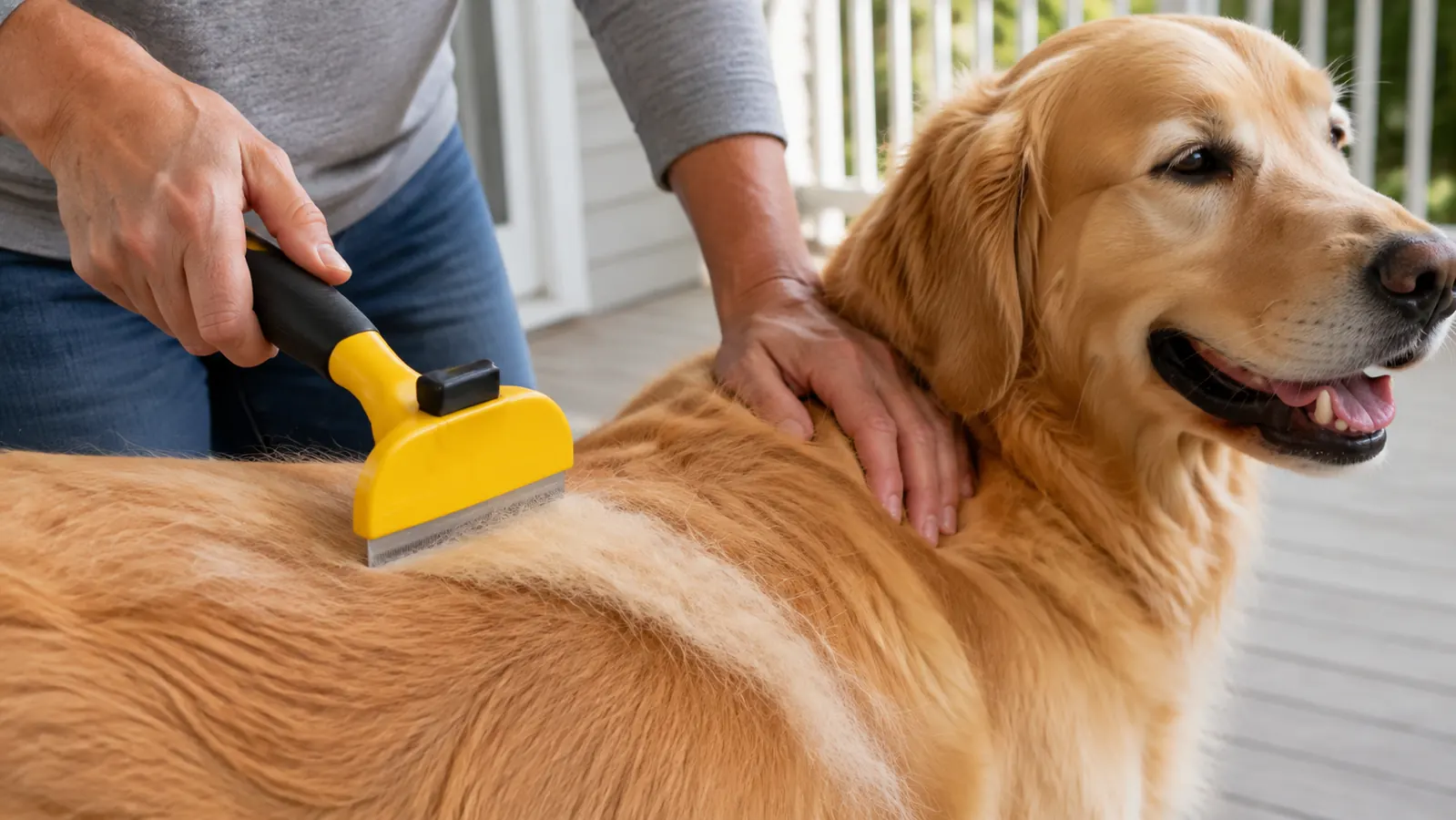
Twice a week, usually on a Saturday morning on the back porch, I give Sadie a ten-minute session. I work in sections, starting at the shoulders and moving down her sides, always going with the grain of the coat. I keep a bowl of water nearby because she gets warm and thirsty, and I stop every couple of passes to clear the blade. The whole thing happens outside when the weather allows, because ten minutes on a golden retriever in peak shedding season produces enough fur to notice.
The routine has stayed pretty constant for six months, rain or shine. In heavy shedding season, which for a golden retriever is most of spring and fall, I bump it to three times a week. In the winter I can sometimes get away with once every ten days and she still looks tidy. The tool lives on a hook by the back door so it is not a project I have to gear up for, it is just part of the Saturday rhythm.
I use it before a bath, not after, because the loose undercoat comes out far more easily on dry fur. It takes a few minutes longer than a quick brush, but the pile of fur at the end tells you why. On bath days I brush her out first, then wash, and the water runs noticeably clearer than it did before we owned this tool.
Getting Sadie comfortable took about three sessions. The first time the edge touched her back she turned to look at me like I had brought a strange contraption home. I started with two minutes on her shoulders where she is least sensitive, gave her a treat, and quit while we were ahead. Now she trots out to the porch when the tool comes off the hook, and that alone tells you more than any rating I could give.
What the FURminator Actually Does
The FURminator is not a brush, and understanding that is most of the battle. A normal brush smooths the topcoat and lifts some loose hair, but it does not reach the dead undercoat that sits underneath. The FURminator has a stainless steel edge that glides through the topcoat and hooks onto the loose undercoat hairs so they come out in your hand instead of on your couch. It is designed to reach the layer that actually sheds, which is why the results look so different from a brush.
The part I underestimated was the button on top. One press pops the collected hair out of the blade, so you are not spending half the session picking fur out of bristles. That sounds like a small thing, but it is the difference between a five-minute chore and a ten-minute argument with a wiggling dog. Every couple of passes I click it, the fur drops into the trash bag, and I keep going without breaking the rhythm.
The other thing worth knowing is that the FURminator comes in sizes and coat lengths for a reason. The large long-hair version I bought matches a dog the size of Sadie, around 65 pounds, with a full double coat. The edge on the long-hair model is rounded so it slides through feathering without snagging, while the short-hair version uses a different edge. Matching the size to your dog is not marketing fuss, it genuinely matters for comfort and for how much fur you actually pull.
Six Months of Results
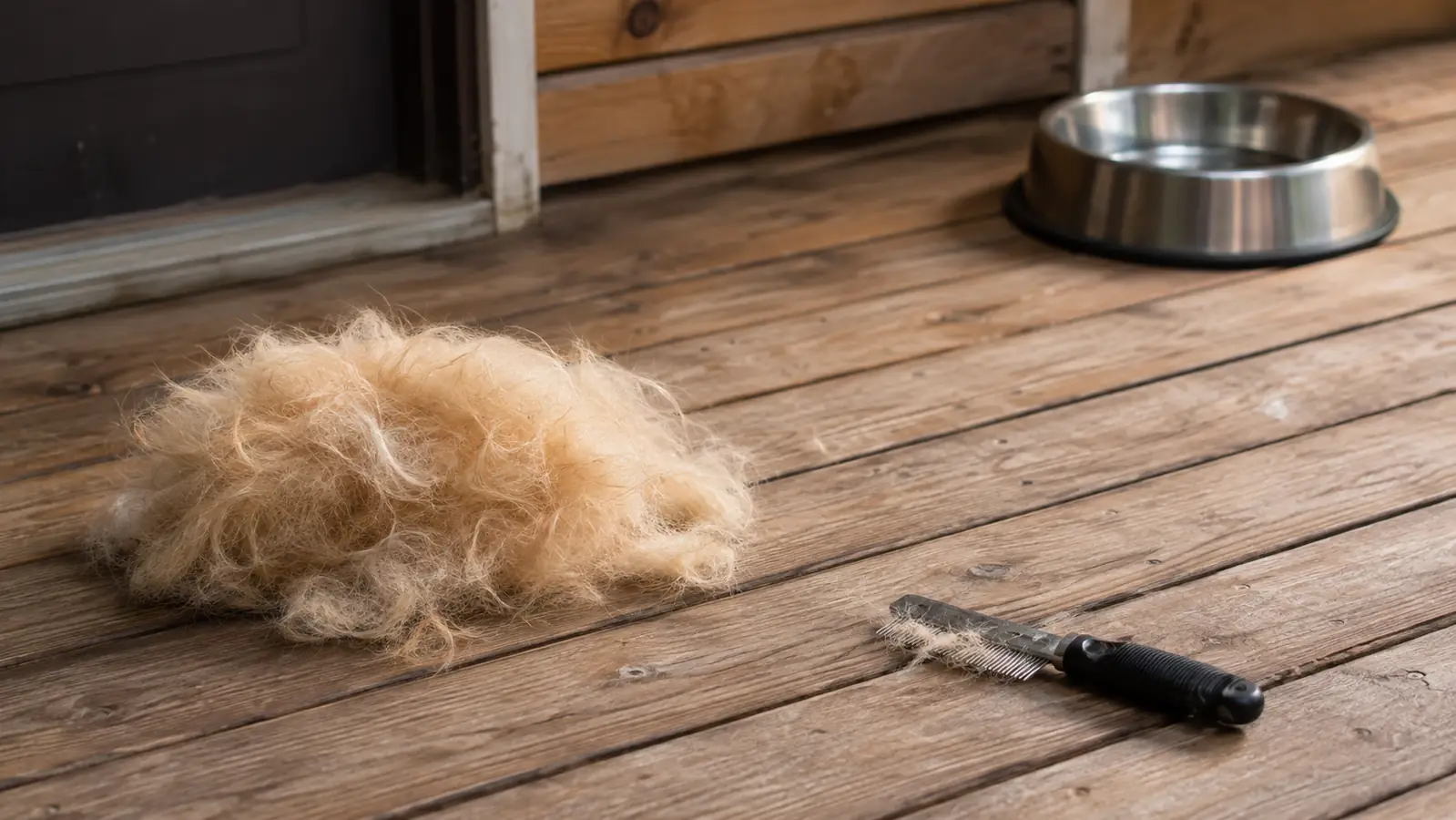
The first session was genuinely shocking. I filled a whole grocery bag with fur off one dog, and I am not exaggerating. Over the next few weeks the volume per session dropped steadily, which is exactly what you want: it means the tool is getting the undercoat out before it has a chance to shed around the house. By the second month a normal session produced maybe a quarter of that first haul, and that steadier, smaller amount is the real signal that the coat is being maintained rather than stripped.
The house difference took about a month to really notice, and then it was obvious. The vacuum bag lasts longer, the couch does not need a lint roller before every guest, and I stopped finding fur on my work pants after a quick cuddle. Sadie sheds, she is a golden retriever and she always will, but the coat of fur on everything is mostly gone. My brother-in-law, who is not someone who notices much, asked halfway through the spring whether we had changed her food. That is how visible the change was.
Her coat itself looks better, not thinner. The tool pulls the dead undercoat, not the healthy topcoat, so her fur looks cleaner and lies flatter. That was my biggest worry going in, that I would ruin her coat or leave bald patches, and six months later it has not happened. The topcoat is intact and the feathering on her legs and tail still has its full shape.
The unexpected win was how much calmer Sadie is during grooming now. Part of it is that she has learned the routine, but part is that the tool does not pull. My old shedding blade yanked and she fought it every time, ears back, trying to get away. With the FURminator, a session is over in ten minutes and she goes back to napping instead of hiding under the kitchen table. A tool that your dog does not dread is worth something on its own.
The Right Way to Use It (and the Mistakes I Made)
The biggest mistake I made was pressing too hard at the start. The edge needs to skim the coat, not dig into it, and the first time I worked a patch of her flank too aggressively her skin turned pink and she let me know she was done. Since I switched to a light hand and let the tool do the work, she actually leans into the sessions. If you can hear a scraping sound, you are pushing too hard.
The frequency lesson took me a while too. When I first saw how much fur came off, I wanted to do it every day. That was too much, her skin got sensitive and she started to resent the sessions. Two or three times a week is the sweet spot for us, and during the heaviest shedding weeks I still do not go more than every other day. More is not better, and the instructions are clear that overuse can irritate the skin.
The other lesson was about mats. The FURminator is not a detangler, and running it over a mat or tangle just pulls and hurts. I work out any knots with a separate dematting comb first, and I never use the tool on a matted patch. It is also worth repeating that the instructions say not to use it on skin that is irritated, sunburned, or on a fresh wound. None of that is exotic, it is just the difference between a tool that helps and a tool that hurts.
The Downsides and the Alternatives
It does not detangle, and it is not a miracle worker. If your dog has mats, you still need a separate tool. And it costs more than a standard brush, so it is only worth it if you will actually use it twice a week. If you are not going to stick with the routine, a cheaper brush will get you the same amount of nothing. I say that as someone who bought it hoping it would be a silver bullet, not as someone with a stake in talking you into it.
It is also not the right tool for every coat. My neighbor has a pit bull with short, single-coated fur and the FURminator did almost nothing for him. Dogs that shed a heavy undercoat, the double-coated breeds, are where this tool shines. For a single-coated dog, a simple rubber curry brush is probably the better buy and a third of the price. The tool is not bad, it is just aimed at a specific kind of shedding.
I compared it against an undercoat rake and a slicker brush before I bought it. The rake is good for very heavy coats but I found it harder to control and it pulled more, which made Sadie wary of it. The slicker brush is excellent for everyday finishing and getting out surface tangles, but it does not pull the undercoat the way the FURminator does. For us, having the FURminator for the big shedding jobs and a slicker brush for touch-ups is the combination that worked, and I would not call either one a waste of money.
One more honest note about maintenance. The edge needs a wipe after each session and an occasional rinse under warm water, and the instructions recommend a little blade oil now and then to keep it gliding. That is five minutes of care, not a burden, but it is real. If you are someone who will throw the tool in a drawer and never wipe it down, the edge will dull faster than you expect, and a dull edge defeats the whole point.
What I Liked
- Pulls out far more loose undercoat than any brush I have tried
- The eject button clears the blade in one press, no picking fur out of bristles
- Solid build and a comfortable handle for ten-minute sessions
- Visible reduction in house fur within about a month
- The stainless edge has held up with no rust after six months
Where It Falls Short
- Costs more than a standard brush
- Does not detangle mats, you still need a second tool
- Needs a light touch, pressing hard irritates the skin
- Not effective on single-coated or short-haired dogs
The first session pulled more fur off one dog than the previous six months of brushing combined, and the pile honestly looked like a second dog.
Who This Is For
This is for anyone with a double-coated, heavy-shedding dog, the goldens, labs, German shepherds, huskies, and collies of the world, who is tired of fur on the furniture and willing to spend ten minutes twice a week. It is also for the budget-conscious owner who would rather buy one good tool than keep buying lint rollers and vacuum bags, and for anyone who wants their dog to look like they actually brushed them between groomer visits.
Who Should Skip It
Skip it if your dog has a short, single coat with no real undercoat, because you will not see the payoff. Skip it if you are not going to keep up a routine, because an occasional session will not make a lasting difference. And skip it if what you actually need is a detangler, because mats are a separate problem and this tool will not fix them. There are cheaper tools that do a fine job for lighter shedders, and buying the FURminator for the wrong coat is how it ends up in a drawer.
Six Months In, I Would Buy It Again
The FURminator is not magic and it does not stop shedding completely. But it cut the loose fur in our house by more than I expected, and Sadie has started coming to find me when she sees the tool come out. If you have a double-coated dog, this is the one grooming tool I would own first.
Amazon Check Today's Price on Amazon →