
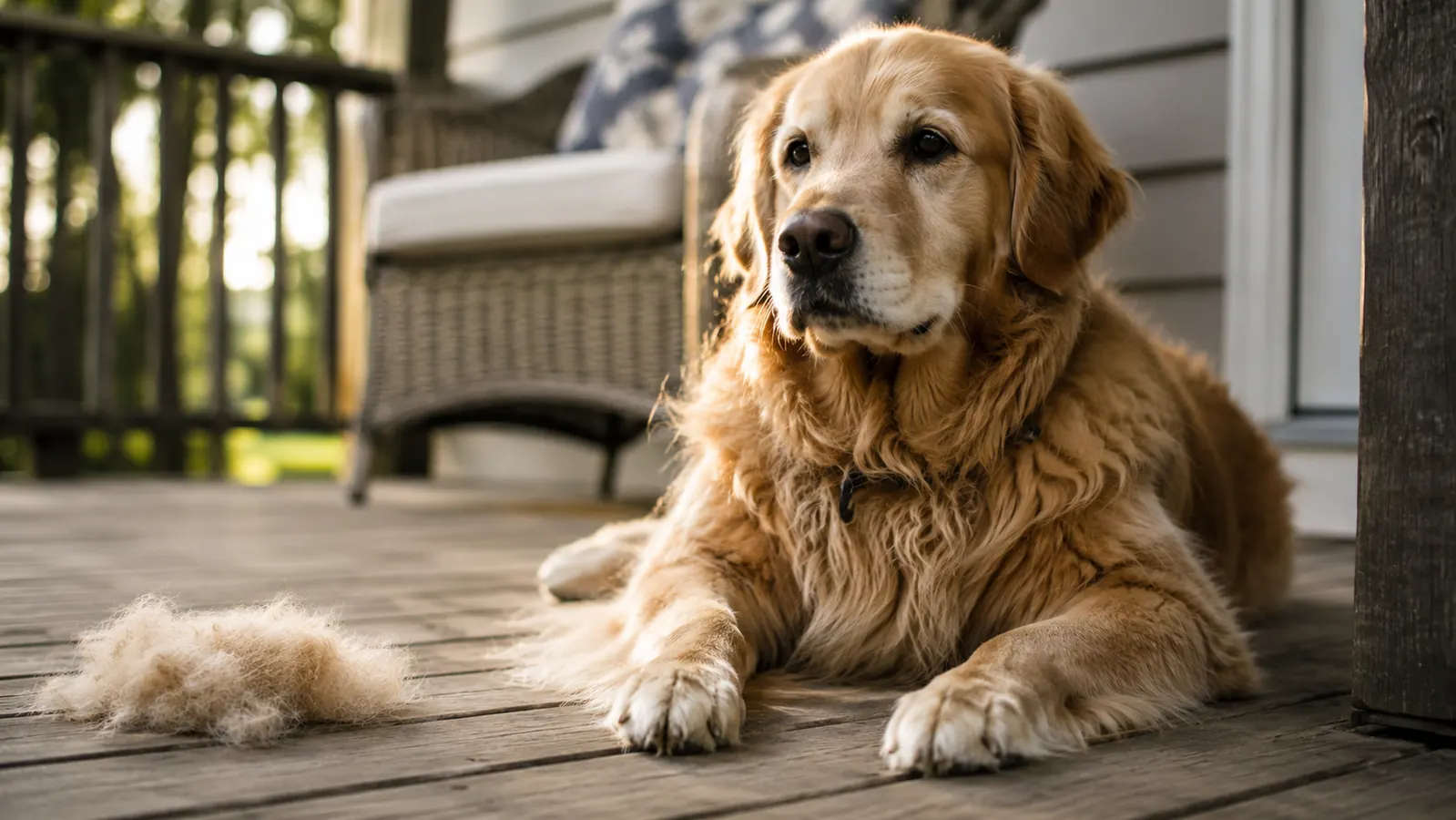
Every pair of black pants I own has a thin layer of golden fur on the thigh. There is a lint roller in the car, one by the back door, and one in the kitchen drawer, and last spring I still fished a dog hair out of my coffee mug twice in one week. The source is Daisy, our 9-year-old golden retriever, and for a long time I told myself shedding was just the price of living with a dog like her.
I did not give up without a fight. I tried a cheap slicker brush, a rubber curry comb, a grooming mitt, and a vacuum attachment that made Daisy dive under the bed. Every one of them grabbed the topcoat that was already falling out, but none of them touched the dense undercoat underneath, and that is where most of the shed comes from on a double-coated dog. By mid-April the couch looked like a second golden was sleeping on it, one made entirely of loose hair.
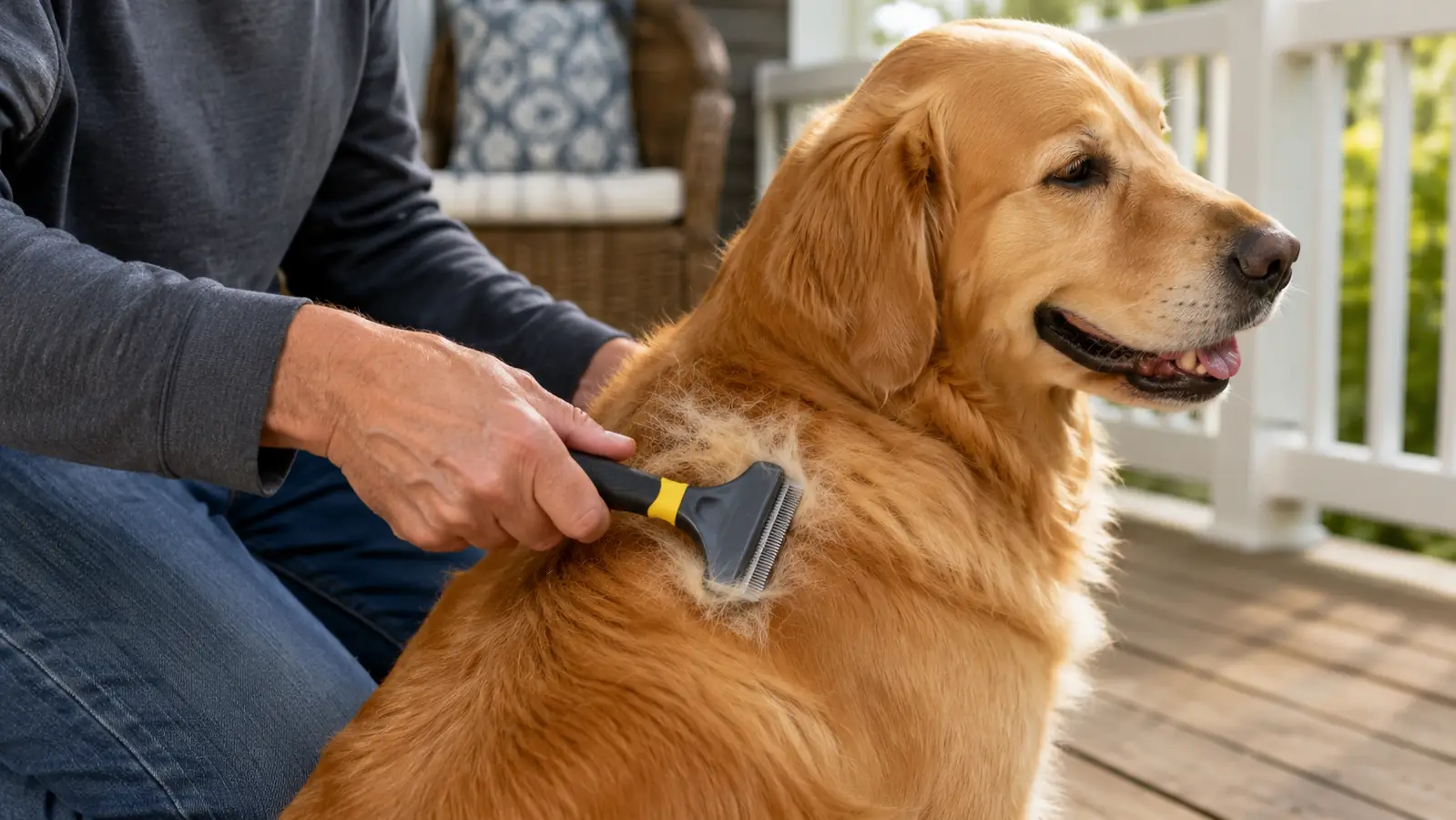
A friend who shows Labs told me to stop brushing the surface and get the loose undercoat out at the source. She handed me her FURminator and told me to start on Daisy's back legs, where the coat is longest and the fur loosest. I was skeptical, because the tool looked small and I had already spent a fair amount of money on grooming gear that now lives in a drawer. But she knows dogs, so I took it home and tried it on the porch one Saturday.
Ten minutes later I had a pile of undercoat on the porch floor that I could have stuffed a throw pillow with. Not surface hair, the soft gray-blond stuff underneath that was already dead and just waiting to drift across the house. Daisy sat through the whole pass without a fuss, which surprised me, because she treats most grooming tools like something the vet invented. She even leaned into it a little once she figured out it did not hurt. I just stood there staring at the pile.
That first session is why I am writing this. We have used the FURminator every week since, straight through the spring shed, and I want to tell you plainly what it did and what it did not do, so you can decide whether it is worth your money. It is not a miracle, but the house is a different place than it was in April.
I pulled enough loose undercoat off Daisy in ten minutes to stuff a throw pillow. Two weeks of that routine and my couch stopped growing its own coat.
Stop finding fur on everything you own.
The FURminator we use on Daisy is the large version for long-haired dogs, and it reaches the loose undercoat that brushes and combs never touch. This is the tool that finally got the hair off the dog and out of the house.
Amazon Check Today's Price on Amazon →The tool has a stainless steel edge that reaches down into the undercoat without cutting the topcoat, and a button that ejects the collected hair so you are not picking it out of the teeth every thirty seconds. That eject button turned out to matter more than I expected. With the old brushes I spent more time cleaning the brush than brushing the dog. With this one I brush a section, pop the button, and the fur comes out in one lump.

We settle Daisy on the back porch with a bully stick, work her back and sides in sections, and she gets a good scratch and a treat for holding still. A full pass takes about twenty minutes once a week through shedding season, and maybe ten minutes every other week the rest of the year. She knows the routine now and trots over when she sees me pick the tool off the shelf.
The honest part, and I mean this part: it will not stop a golden retriever from shedding, and anybody who tells you otherwise is selling something. What it did is get the loose hair out in one place, outside, before it ended up on the couch, the rug, and my work shirts. Our vacuum runs less, the furniture looks better, and I stopped buying lint rollers by the four-pack.
The first two weeks were the most noticeable. I would brush Daisy on Saturday, and by Monday the worst of it was gone from the house. The fur that used to drift into corners just stopped showing up in the same volume. It was not zero, it will never be zero, but it went from a constant background mess to a normal amount of dog.
A few cautions after six months of use. Work in short strokes with light pressure, because the edge is sharp and a double-coated dog has sensitive skin under all that fluff. Never drag it through a mat, get mats out first with a slicker. And keep the sessions to the back, the sides, and the chest, the spots where the loose coat lives. We have never so much as reddened Daisy's skin, but the tool deserves respect.
What I'd Tell You If We Were Sitting at My Kitchen Table
If we were sitting at my kitchen table I would say it this way. If your dog has a thick double coat, a golden retriever, a Lab, a husky, a shepherd, the FURminator is one of the few grooming purchases that genuinely earns its place in the drawer, because it pulls the loose undercoat out before it lands on your furniture. If your dog has a short single coat, save your money. Buy the size that matches your dog, use light pressure, work outside, and do it once a week through shedding season. Daisy still sheds, she will always shed. But my pants come out of the wash clean, my couch is back, and I am no longer fishing dog hair out of my morning coffee.
The tool that gave us our house back.
It is the FURminator for large long-haired dogs, the exact one we reach for every week. If you live with a double-coated shedder, this is the place to start.
Amazon Check Today's Price on Amazon →