
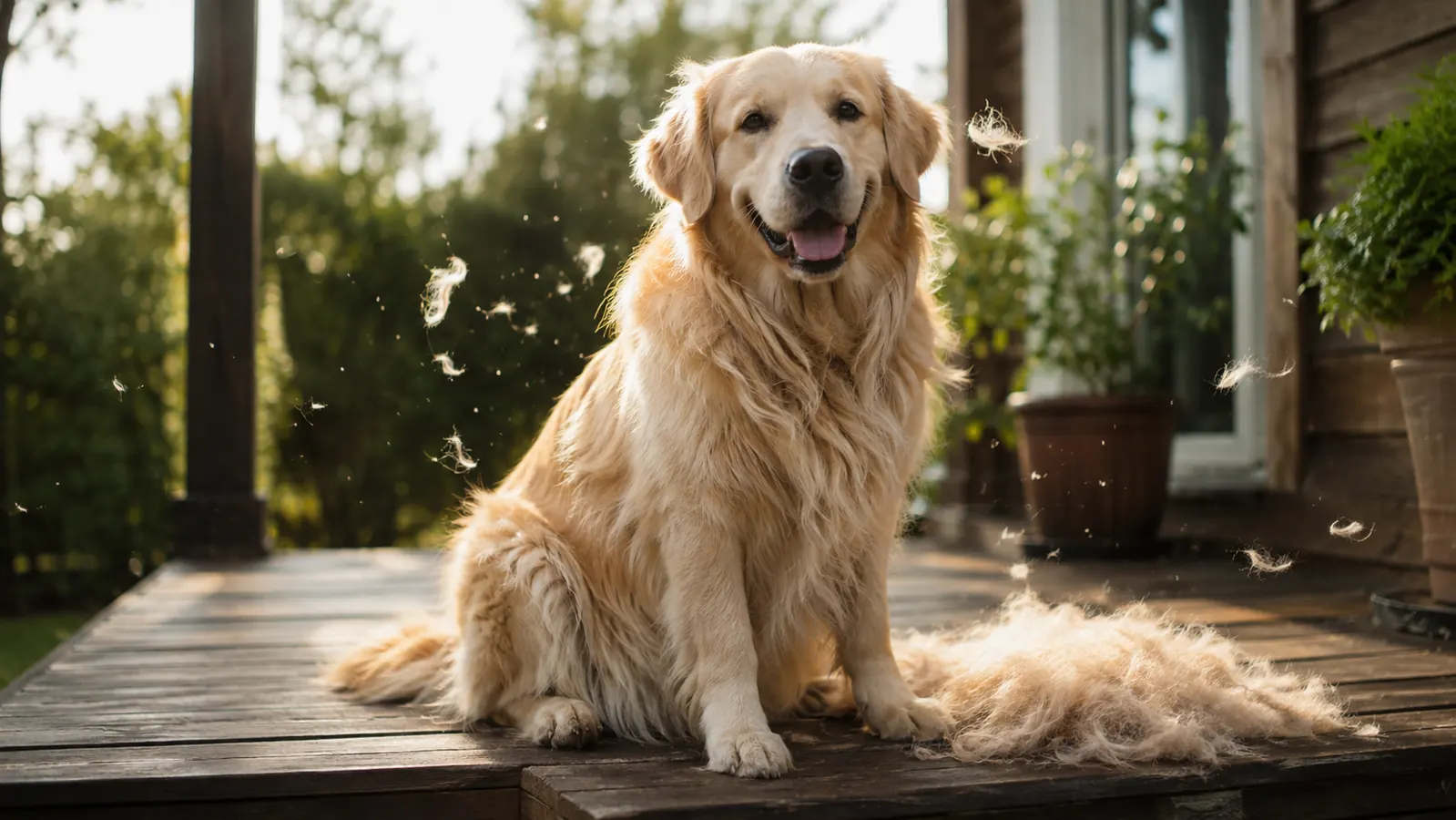
Every spring I stopped inviting people over because of the dog hair. It floated off Penny in sheets, wove itself into the couch cushions, and turned every pair of black pants into a lint roller ad. I tried a slicker brush, then a shedding blade, then a rubber curry mitt that mostly just pushed the fur around in circles. None of it touched the real problem, which was not the hair sitting on top of her coat. It was the loose undercoat underneath, the stuff a double-coated dog sheds in fistfuls, and you cannot get at it with a tool that only skims the surface.
The FURminator is the tool that finally reached that undercoat, and this is the review I wish I had found before I spent the money. Not another list of five reasons it is great. The honest version: what it actually pulls off a dog, the mistake I made for the first month that could have hurt Penny, and why it will not help every dog on the street no matter how much you paid for it.
The Quick Verdict
On a long-haired, double-coated dog it removes more loose fur than any brush I have owned, but only when you use light pressure and brush outside. It is a specialist, not a cure-all.
Amazon Check Today's Price →The Brush That Finally Got the Undercoat
The FURminator for large, long-haired dogs pulls the loose undercoat a slicker brush never reaches. If Penny's shedding looks anything like your dog's, this is the tool I would start with, and I have done the trial and error so you do not have to.
Amazon Check Today's Price on Amazon →How I've Used It
I have been using the FURminator Large for Long Hair on Penny, a four-year-old golden retriever, for about six months now, through a spring blowout, a full summer, and the start of fall. Golden retrievers are basically designed to shed, and Penny treats it as a full-time job. In the spring and fall she drops her undercoat hard enough that a single brushing can fill a grocery bag, and even between blowouts there is a steady drift of loose hair working its way out every single day.
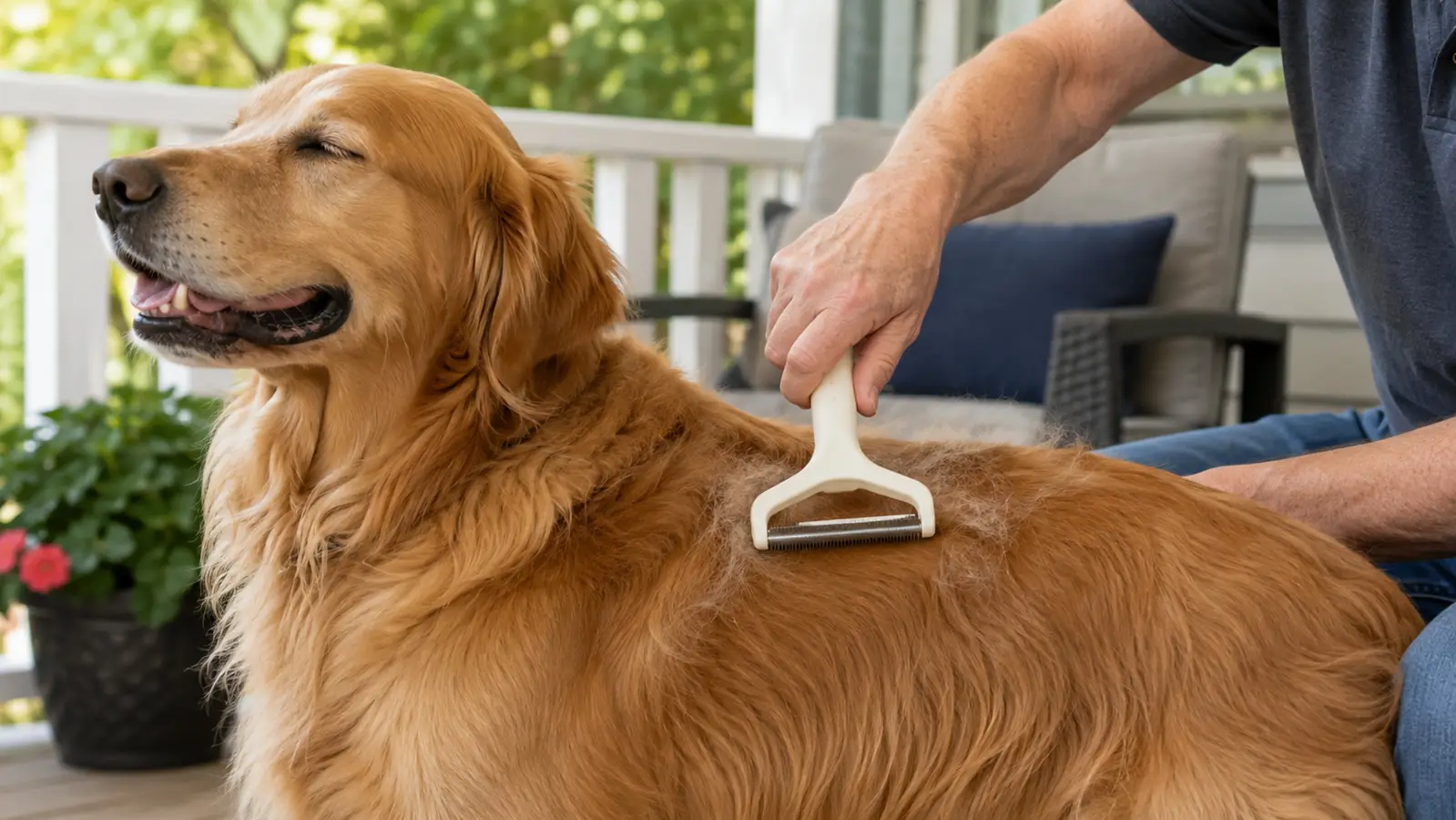
The routine matters more than the tool, so here is the whole routine. I brush her on the porch once a week during heavy shedding and every other week the rest of the year. A session runs twenty to thirty minutes, longer during a blowout. I start behind her shoulders and work toward her tail, going with the grain of the coat. I keep one hand on her side so I can feel if the edge starts to dig in, and I stop the moment she shifts her weight.
After the FURminator I run a slicker brush over her topcoat to smooth everything back down, and during a blowout I follow up with a bath. The bath rinses out the loose hair the tool loosened but missed, and it keeps the worst of it off the furniture. Before the FURminator I was vacuuming the living room every day and still finding fur wads under the sofa. Now I vacuum two or three times a week and the difference is visible the moment you walk in.
A few notes for people who have never used one. The Large Long Hair version has longer teeth than the short-hair model, which is what lets it reach through the feathering on a golden or a shepherd down to the undercoat. It is not a daily brush. Once a week is plenty, and every other week is fine for most of the year. Over-brushing with this tool can irritate the skin, and I will come back to that in a minute.
What Nobody Tells You Before the First Pass
The first time you use it, you will almost certainly think you are hurting the dog. Not because the dog is yelping, because of what comes off. On a double-coated dog in full shed, the first session pulls out a pile of undercoat that looks like you could knit a second dog. I am not exaggerating. I laid it on the porch step to show my wife, and she asked if Penny was okay. That pile is the loose fur that would have ended up on the couch, the car seat, and your work pants over the next two weeks.
Nobody tells you to do this outside. I made that mistake exactly once, inside, and the fur did not fall to the floor the way you would expect. It went airborne, drifted into the kitchen, and settled on every surface within ten feet. Now I brush on the porch, with a trash bag open at my feet, and I still find fur in my hair afterward. Plan for the mess and it stops being a problem.
The second thing nobody tells you is that the tool does not stop shedding. It pulls the loose undercoat out early and all at once, so instead of a constant snowstorm you get one big pile and then a much quieter house. But the undercoat keeps growing back, which means you keep brushing. It is not a one-time fix. It is a weekly chore that makes every other cleaning chore easier.
Expect the dog to shed less over the next several days, not to go bald. If you see bare skin or thinning patches, you are over-grooming, which is a real risk with this tool. Give the coat time to recover and back off to every other week.
By the third pass I had a pile of undercoat the size of a small throw pillow on the porch step, and Penny was calmer than she is at the vet.
The Pressure Problem: Where Most People Go Wrong
The most common mistake, and the one that gives this tool a bad reputation, is pushing down too hard. The FURminator has a stainless steel edge, and it is sharper than it looks. Press it into the coat like you are scrubbing a pan and you will scrape the skin underneath, which is exactly why some reviews mention redness and irritation. Penny flinched and pulled away the first time I tried it, because I was bearing down like the brush had to work to be working.
The right technique is light, slow strokes, going with the grain, and letting the edge catch the undercoat as it glides over the topcoat. You want a soft zipper sound, not a digging feeling. If the tool snags or the dog leans away, you are pressing too hard or the coat has mats. A matted coat needs to be combed out or clipped before you bring this anywhere near it. Running the FURminator over a mat tugs the skin, hurts the dog, and teaches them to run when they see the tool coming.
Give yourself two or three sessions to find the right pressure before you judge the tool or the dog. My rule is simple: if I can feel the edge catching on the skin, I am doing it wrong. When you get it right, the dog leans into the brush and the session turns into a spa day. That is the version that makes the mess worth it.
It Only Earns Its Money on the Right Coat
This is the honest part that a lot of glowing reviews bury. The FURminator is a specialist, not a universal brush. It earns its keep on double-coated dogs with a real undercoat: golden retrievers, labs with a heavy coat, huskies, German shepherds, border collies, and most spaniels. If your dog has that kind of coat and sheds in fistfuls, this tool will pull more loose fur in one pass than anything else I have tried.
If your dog has a short, smooth single coat, like a beagle, boxer, or most terriers, you do not need this. A rubber curry mitt or a good bristle brush handles that coat for a fraction of the price, and the long teeth will just skate over the surface and do almost nothing. There is a short-hair version of the FURminator, and it is a better match for a lab with a tight coat, but for most smooth-coated dogs the cheaper tool is honestly the smarter buy.
It is also not a fix for shedding caused by allergies, skin issues, or stress. If your dog is losing hair in patches, scratching constantly, or has red irritated skin, a brush is not the answer and a vet is. The FURminator removes loose undercoat from a healthy coat. It does not diagnose anything, and using it on an irritated coat will only make the irritation worse.
How It Compares to the Alternatives I Tried
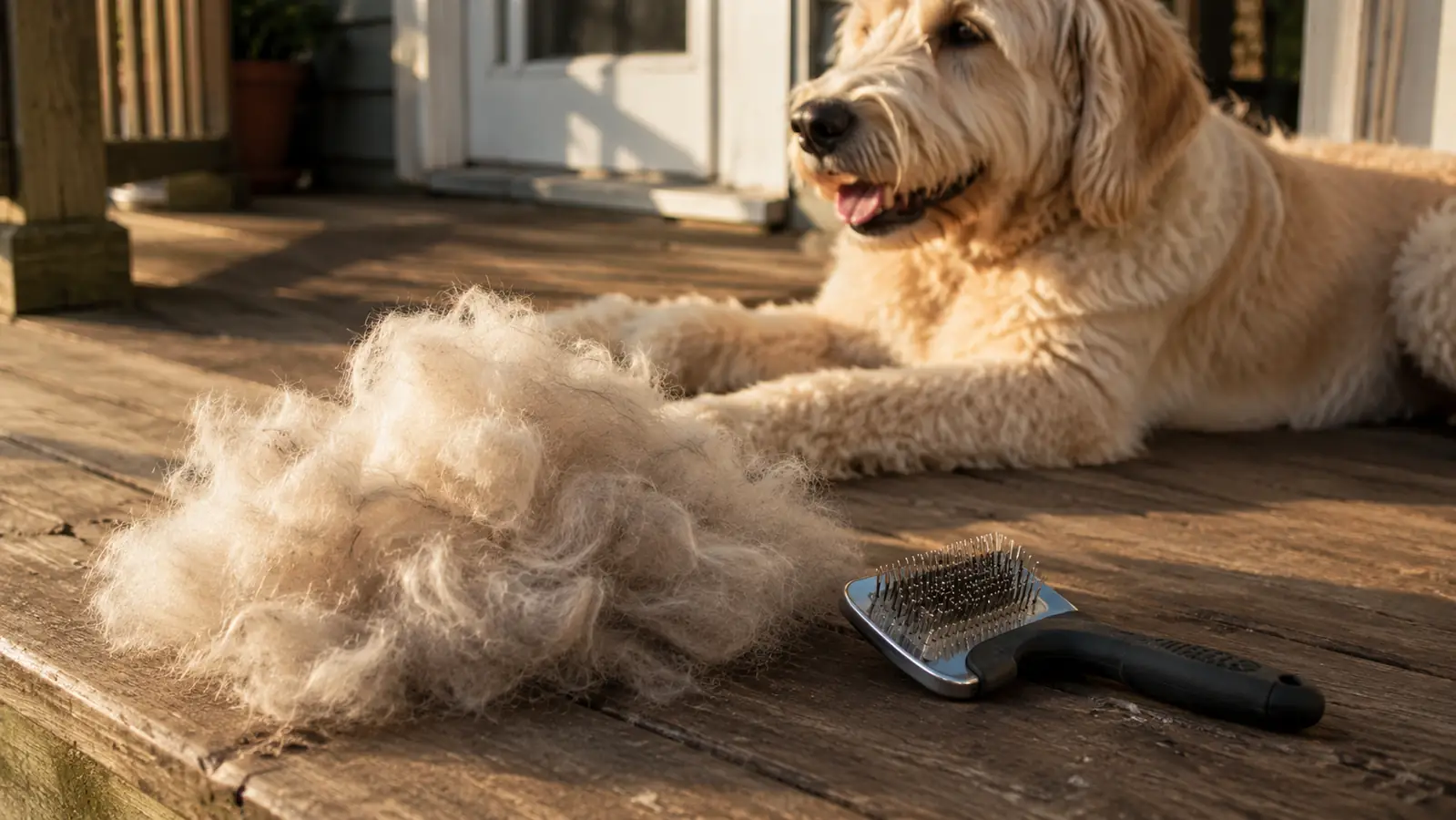
Before the FURminator I owned the standard trio, and it helps to know where each one falls short so you understand what you are buying. The slicker brush is great for the topcoat and for daily touch-ups, but its fine wires skim the surface and never pull the undercoat, so it mostly redistributes fur from one piece of furniture to the next. The shedding blade, a loop of metal with teeth, does pull hair, but I found it harsh. It snagged on Penny's feathering and she tolerated it far less.
The undercoat rake is the closest competitor, and on a very thick double coat it is genuinely effective. Its tines are stiff, it catches more, and it takes longer, and on Penny it made her fussy. The FURminator glides more smoothly and collected more per pass. The tradeoff is price. The FURminator costs more, and the rake is the better budget pick if your dog only has a light undercoat and does not shed in earnest.
The rubber curry mitt, the one I tried first because it was cheap, did nothing for Penny beyond making her fur shine for an afternoon. It is a fine tool for a short-coated dog, but it cannot reach an undercoat at all. I mention it because it is the default first buy for most owners, and it is also the reason a lot of people assume deshedding tools are a gimmick. They are not. They just have to be the right tool for the coat.
For our situation, a long-haired double coat that sheds hard twice a year, the FURminator is the one I reach for first. But I will not call it perfect. It is a well-made tool that does one job really well, as long as you use it on the right coat and use it gently. That is the honest summary, and it is more than most reviews will give you.
Cleaning and Caring for the Tool
The FURejector button on the back pushes the collected hair out of the teeth with a click, and it works well enough that I do not have to pick hair out strand by strand. I still wipe the edge with a paper towel after each session to get the oils off. Every few months I rinse the head under warm water and dry it completely. The handle is comfortable and the build has held up to six months of weekly use without a wobble, which is more than I can say for the brushes it replaced.
One small complaint about the design: the head does not detach from the handle for cleaning, so you rinse the whole thing and dry it carefully. It is a minor annoyance, not a deal breaker. The FURejector also tends to fling a little fur when you press it, so I aim it at the trash bag. These are small things, but they are the sort of detail an honest review should mention.
What I Liked
- Pulls an amount of loose undercoat no other brush I have owned can match
- Longer teeth on the large long-hair model actually reach a double coat
- Noticeably less fur on furniture and floors after the first two weeks
- FURejector button clears the teeth quickly between strokes
- Solid build that has held up to six months of weekly use
Where It Falls Short
- Takes practice to use lightly; press too hard and it scrapes the skin
- Only works on the right coat type, and is useless on short smooth coats
- Can be dangerous on a matted coat, which must be combed out first
- Brushing must happen outside or the fur goes airborne
- Costs more than a slicker brush, shedding blade, or rubber mitt
- It reduces shedding, it does not end it, so the routine never stops
Who This Is For
Buy the FURminator if you have a double-coated dog that sheds, and you are tired of vacuuming twice a day and finding fur in your coffee. Buy it if you want one solid grooming tool instead of a drawer full of cheap ones, and you are willing to spend twenty minutes outside once a week. Buy it if you can commit to light pressure and a routine, because the tool only delivers when you use it correctly and consistently.
It is also a good fit if you have a large, long-haired dog and you have priced professional deshedding appointments lately. A handful of home sessions covers the cost of the tool, and you keep the tool for the life of the dog. For that kind of household, I think it earns today's price, and I would buy it again without a second thought.
Who Should Skip It
Skip it if your dog has a short smooth coat, a matted coat, or skin that is already irritated, because you will either waste the money or do more harm than good. Skip it if you will not brush on a schedule, since the tool only helps while you are actually using it. And if your dog is small, buy the small or medium size instead; the large long-hair model is built for big dogs like Penny, not for a ten-pound companion.
Skip it if your dog hates being brushed no matter what you use. No tool fixes that, and forcing the issue with a stainless edge is a good way to make it worse. And skip it if you expect a one-time fix. The honest version is that this is a weekly chore that pays off, not a magic wand. It has cut our fur problem down to size, and that is exactly what it will do for you if your dog matches the coat type.
Still Wiping Dog Hair Off Everything You Own?
If your dog has the kind of coat that sheds in fistfuls, the FURminator Large for Long Hair is the tool that finally worked for Penny and me. Read the honest tradeoffs above, and if your dog fits the coat type, it is worth today's price.
Amazon Check Today's Price on Amazon →