
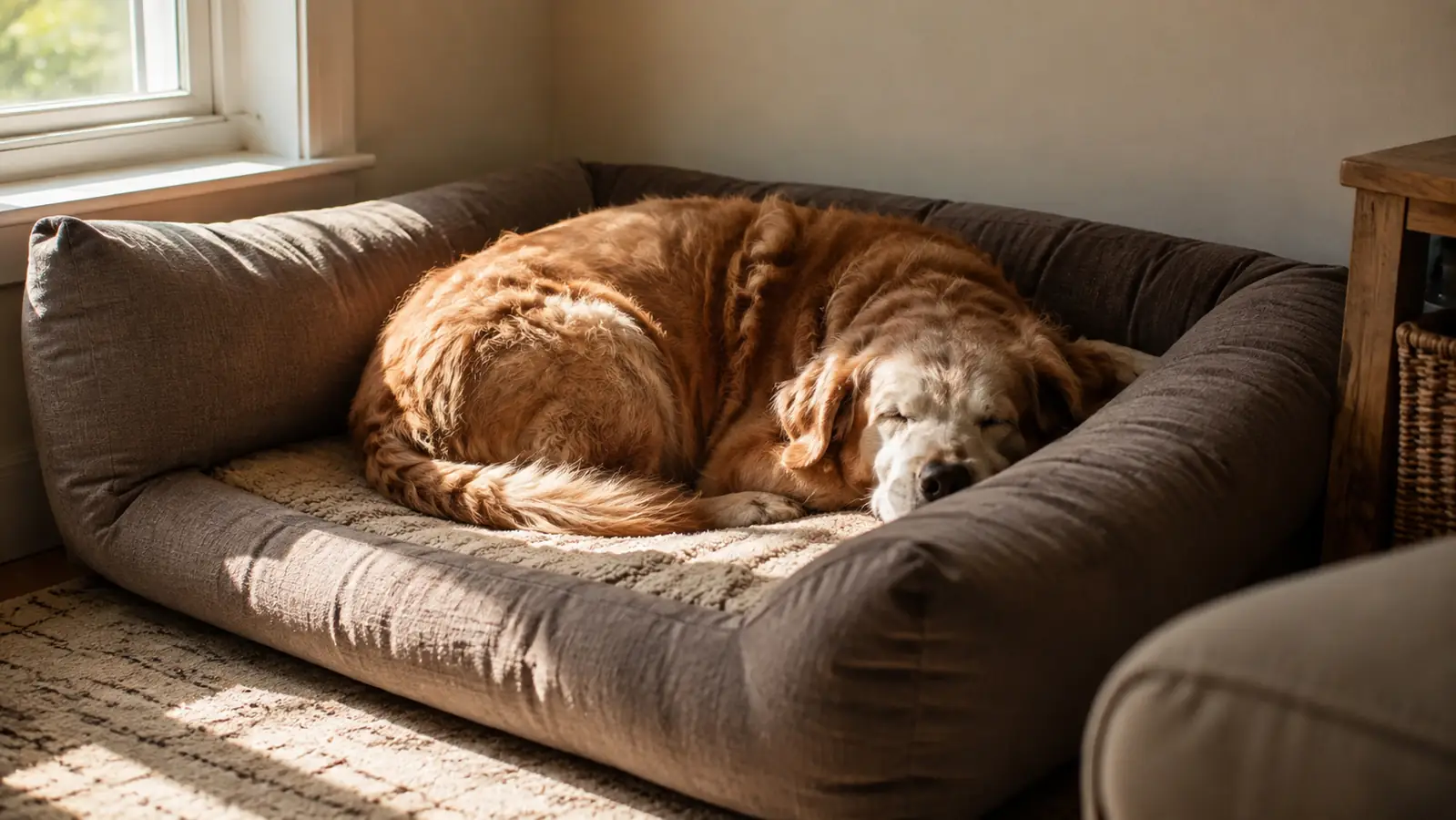
My golden retriever mix, Sadie, is 11 years old, close to 70 pounds, and has arthritis in both hips. For two years she slept on a cushion bed that had flattened to roughly the thickness of a placemat, and every morning she stood up stiff, took a few hobbled steps, and then loosened up. I had already tried the cheap fix from the big box store, a mid-price pillow the cat claimed within a week, and a folded blanket she refused to touch. When I ordered the FurHaven Jumbo XL orthopedic bed, I told myself this was probably more of the same marketing. I was wrong about that, and I was also wrong about a few things worth knowing before you hit the order button.
This is the honest review, the kind I wanted to read before I bought it. I am not going to tell you the bed cured Sadie's hips, because it did not. She is still an old dog with arthritis, and some mornings she is still slow. But the bed does something real, and it has real tradeoffs, and the tradeoffs are the part the product listing leaves out. If you are trying to decide whether an orthopedic bed is worth it for your dog, here is what a few months of nightly use actually showed me.
One note on how I use it: this is the Jumbo XL, the biggest size FurHaven makes, and it lives in the corner of our living room where Sadie can keep an eye on everyone. Your dog, your floor plan, and your budget will change the details, but the things that matter about this bed are the same at any size.
The Quick Verdict
A genuinely supportive L-shaped bed for the money, but the egg-crate top is softer than the word orthopedic implies, the plush cover grabs fur, and you should size up.
Amazon Check Today's Price →The Most Support You Can Get Without the Premium Price
If you have a stiff older dog that sleeps on a flattened cushion, this is the bed to try first. The base is firm where it counts, the cover unzips for washing, and it costs a fraction of what the vet store charges for a memory foam bed.
Amazon Check Today's Price on Amazon →How I've Used It
I ordered the Jumbo XL because Sadie is a big dog and I had learned the hard way that pet beds run small. It arrived rolled up and vacuum-sealed in a box, and it took most of a day to puff back out to its full shape. The cover was already on when it arrived, which was convenient, and the whole thing carried a faint new-foam smell for the first day or two. It faded quickly and never came back.
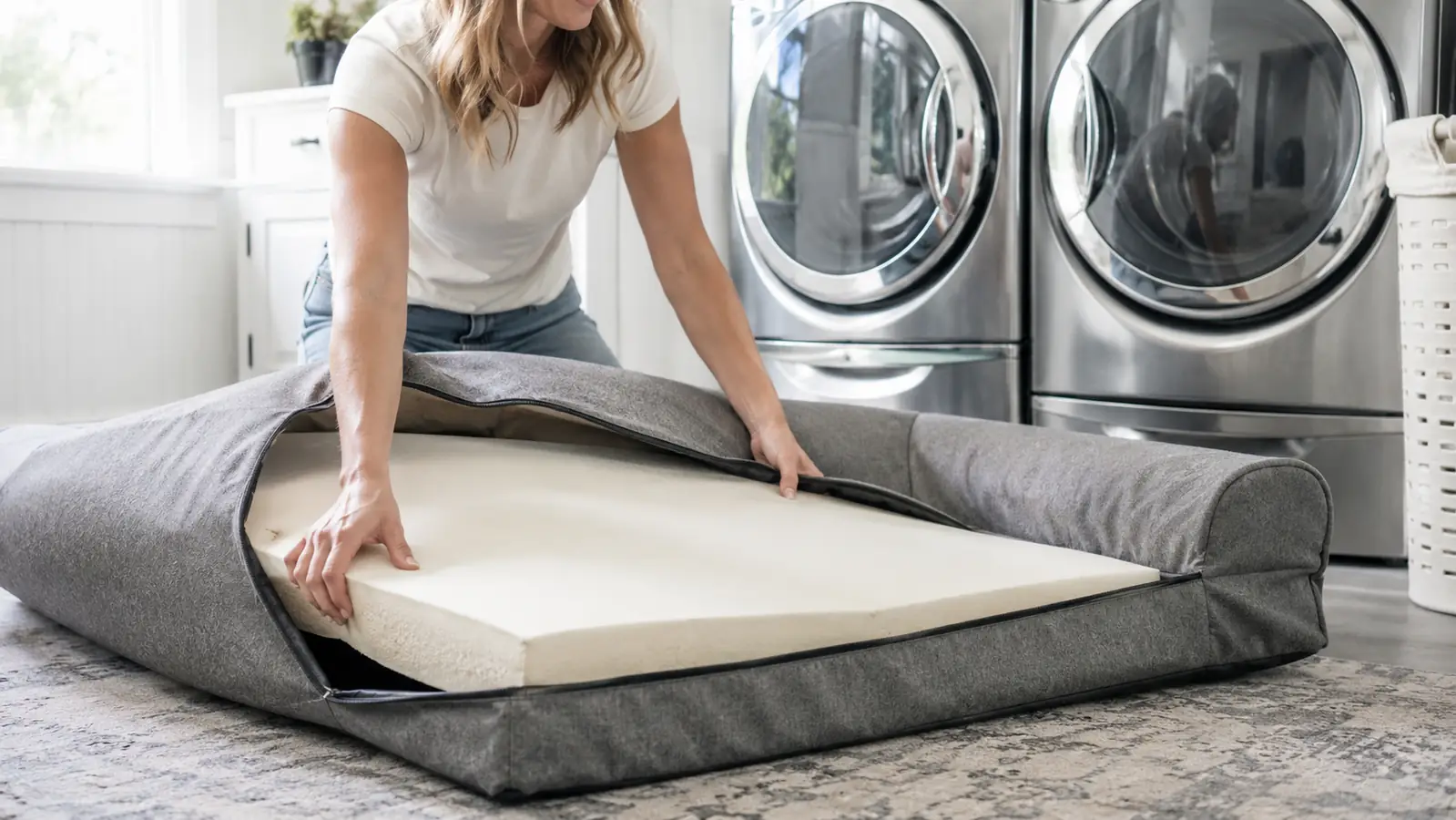
The construction is worth understanding before you judge it. Under the plush cover there are two layers: a soft egg-crate foam on top and a firmer solid foam base underneath. Press on the top and it gives easily. Press harder and you meet the solid layer. That combination is the whole story of this bed, and it is why some owners love it while a few send it back expecting something firmer.
Sadie slept on it the very first night, which surprised me, because she circles and digs before she commits to any new surface. She now sleeps there every night in the corner of the living room. I wash the cover about every three weeks, and I have washed it maybe six times by now with no visible wear. For a bed in daily service, that is a decent track record.
A practical detail: the bed has a non-skid bottom that keeps it from sliding on our wood floor. It still gets shoved around when Sadie really digs in before lying down, but it does not skate across the room the way her old cushion did.
The Foam: What 'Orthopedic' Really Buys Here
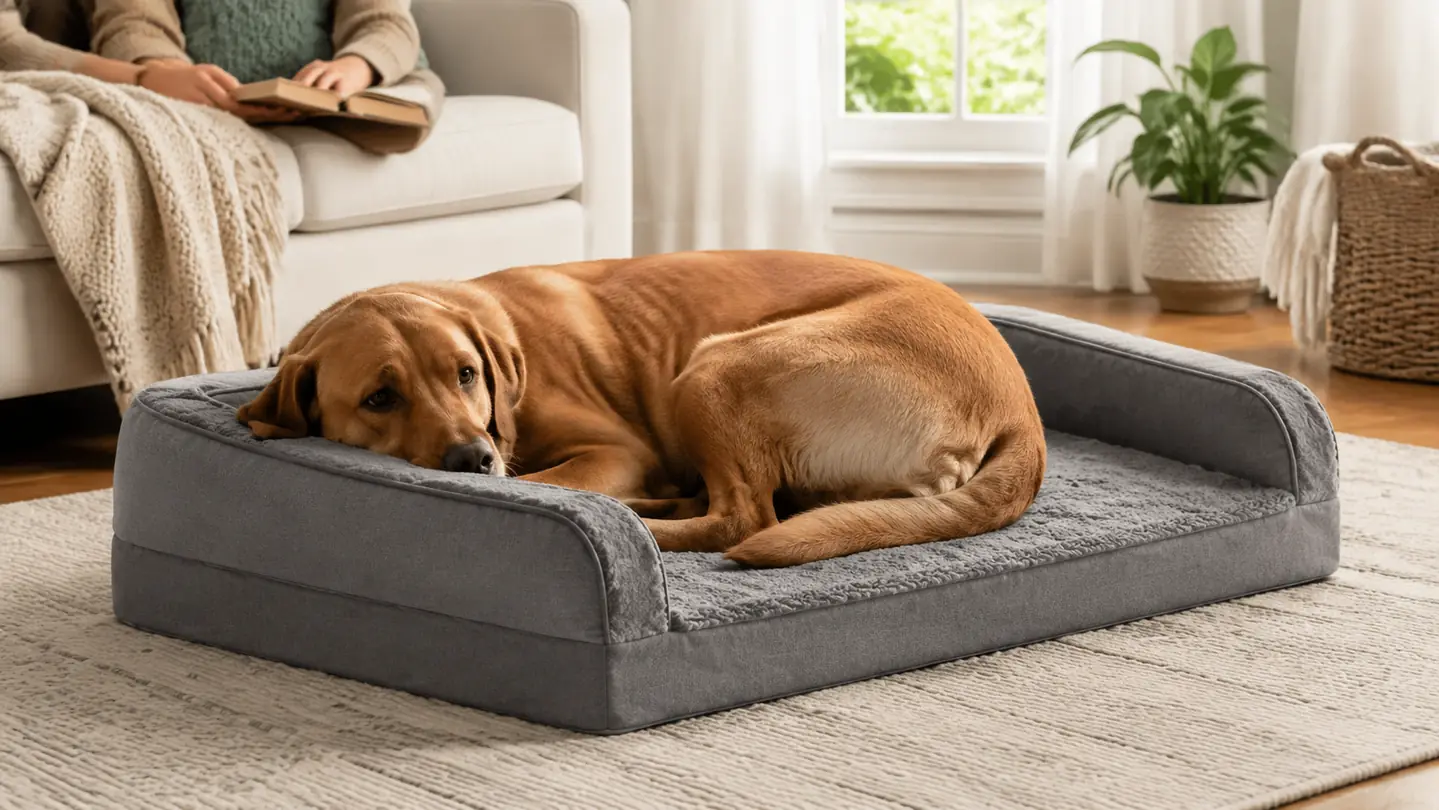
Here is the honest part the listing will not say plainly. The word orthopedic on this bed does not mean a solid slab of high-density memory foam. The egg-crate top layer is genuinely soft, the kind of foam that squishes under a hand and springs back slowly. The base is firmer. The two together are what you are actually paying for, so it helps to know which layer is doing the work.
For a dog with sore hips, that firm base is what matters. When Sadie lies down, she does not sink to the floor the way she did on the flattened cushion. She rests on an even, supported surface, and her back legs do not slide out from under her when she shifts position in the night. That is the real difference between this bed and a pillow, and it is a difference you can feel with your own hand.
The flip side is honest too. If you want the firmest possible orthopedic surface, this is not it. A solid memory foam bed at two or three times the price is noticeably firmer and holds its shape longer. The FurHaven sits in a comfortable middle: softer than the premium slabs, firmer than a pillow. For most older dogs, that middle is exactly right. For a dog that needs maximum support after surgery, it may not be enough.
I also want to be straight about the egg-crate layer. It is soft on purpose, to spread pressure, but it does break in a little over months of daily use. The bed does not go flat, not even close, but the top layer is not as springy at month four as it was on day one. That is normal foam behavior, and it is why I keep the washing routine gentle.
The Cover: The Best Feature and the Most Annoying One
The removable, washable cover is the reason I would buy this bed again. With an old dog, accidents happen, and a bed you cannot wash is a bed you eventually throw away. The FurHaven cover unzips all the way around, the foam core slides out, and the cover goes in the washing machine on cold and air dries. That is a genuinely practical feature, and it is the one thing I would not give up.
The catch is the fabric itself. The plush velvet surface is exactly what a dog wants to curl into, and it is also a magnet for hair, lint, and dust. On a golden retriever, the cover looks like it needs vacuuming about a day after I vacuum it. It is not a dealbreaker, but if you are the kind of person who cannot stand fur on fabric, budget for a lint roller before this bed arrives.
One more warning, learned by doing it wrong once. When you wash the cover, take the foam out gently. The zipper runs the full length and it opens easily, but the foam core is one piece and it can tear if you tug the cover off like you are wrestling a pillowcase. Go slow, slide the foam out like a loaf of bread from a bag, and it will be fine. It is the kind of detail no review taught me.
The zipper itself is a small weak point. It has never broken, but it catches the edge of the fabric if you rush it, and on a bed this size you are zipping a long run. The trick is to pull the fabric away from the zipper track as you go. Minor, but worth knowing.
The L-Shape and the Sizing Question
The L-shaped chaise is one long run for the body with a raised bolster at the head, and it is the right shape for a dog that likes to stretch out with her head propped up. Sadie uses the bolster like a pillow every single night, and she can fold herself into the crook of the L when she wants to curl tight. But that shape costs floor space. In Jumbo XL, this bed needs a real corner and a decent chunk of room, so measure your space before you order, not after.
On sizing, here is the honest rule: size up. The weight ranges on the listing are optimistic. I bought the Jumbo XL for a 70-pound dog, which the listing says fits dogs up to around 90 pounds, and it fits her, but only just. If your dog is between sizes, or is a deep-chested breed that likes to sprawl, go one size larger than you think you need. A bed that is slightly too big gets used. A bed that is slightly too small gets ignored.
One small complaint about the bolster: it is supportive but not firm. A dog that likes to rest her head on a hard edge may find it a little soft and will sometimes slide off in the night. Sadie is fine with it, but I have seen her end up with her head on the floor more than once. It is a cushion, not a wall, and that is worth knowing.
If your dog sleeps stretched out flat rather than curled, the L-shape may not be the best fit. FurHaven makes a rectangular version of the same bed, and for a sprawler that shape uses the floor more efficiently. The chaise gives you the headrest, but it gives up a little useful flat space in exchange.
Alternatives I Considered
Before I settled on this one, I looked at a flat orthopedic mat. It costs less and takes up less floor, but it has no bolster and noticeably less support, and for an old dog that likes a headrest, it was the wrong shape. I also looked at a premium solid memory foam bed that was firmer and held its shape longer, but it cost more than twice as much, and the cover on the model I checked was not removable. For a practical owner on a budget, the FurHaven is the one I would buy again.
The comparison that surprised me is against the human furniture. Before the FurHaven, Sadie spent a lot of time on the couch, which is bad for her hips and bad for the couch cushions. The bed has genuinely cut down on that, because she has a place that is actually more comfortable than the couch. That is not a spec on any listing, but it has been the biggest practical win in our house.
I should also mention that I looked at a much cheaper no-name bed at the big box store before this one. It flattened within a month and ended up in the donation pile. The FurHaven costs more up front, but the washable cover and the firmer base are what make it a buy-once bed instead of a buy-again bed.
What I'd Do Differently Next Time
One honest lesson: buy a waterproof liner before the bed arrives. Sadie is a senior dog with a weak bladder, and in month two she had one accident on the bed. The cover caught most of it and washed out fine, but a little reached the foam core before I got it off. The foam does not soak like a sponge, but it does hold a faint smell, and a thin liner under the cover would have made that a non-event. For an older dog, a liner is cheap insurance, and I would order one in the same cart next time.
The other lesson is about laundry timing. I wash the Jumbo XL cover every three weeks and air dry it, and the dry time is a full day in my laundry room, closer to a day and a half in winter. If you only own one cover, plan the wash for a weekend morning so the bed is back in service by bedtime. I have been caught twice with the cover still damp at 10 p.m. and a very confused dog staring at a bare foam slab. A second cover, if the budget stretches, means the bed is never out of commission for a day.
And one more sizing note, since I already told you to size up. The Jumbo XL fits Sadie, a 70-pound golden mix, with about two inches to spare at each end. If your dog weighs over 85 pounds, or is built deep in the chest, buy the next size above the one the chart points to. A bed that is a little too small is a bed your dog sleeps next to on the floor, and that defeats the whole point.
What I Liked
- The firm base supports an older dog's hips in a way a cushion cannot
- Cover unzips and washes, the single most practical feature
- L-shape gives head and back support in one piece
- Jumbo XL fits a 70-pound dog with room to stretch out
- Costs a fraction of the premium memory foam beds
Where It Falls Short
- The egg-crate top is softer than the word orthopedic suggests
- Plush cover grabs pet hair and lint constantly
- L-shape needs a real corner and a fair amount of floor
- Foam core softens a little after months of daily use
- Cover zipper catches fabric if you rush it
The word orthopedic did not cure my dog's arthritis. What it did was give her a firm, even surface to sleep on, and she stopped waking up stiff every morning. That is the honest win, and it is a real one.
Who This Is For
This bed is for the medium to large older dog that sleeps on a hard floor or a flattened cushion and wakes up stiff. It is for the owner who wants real support without spending premium memory foam money, and who wants a bed they can actually wash. If that sounds like your house, the FurHaven is a sensible first buy, and you can always size up from the chart and be glad you did.
It is also a good fit for a younger dog that is simply a committed sleeper and likes to stretch out with a headrest. The support does not hurt a healthy dog, and the washable cover earns its keep with any dog that sheds or drags in mud.
Who Should Skip It
Skip it if your dog is small enough that a flat mat is plenty, or if you live in a small space where the L-shape will dominate the room. Skip it if you have a dog that chews beds, because the plush cover and the foam core are a target, and a chewed orthopedic bed is a waste of the extra money. And if you need the firmest possible surface for a dog recovering from surgery, buy a solid high-density memory foam bed instead.
Also skip it if you are hoping for a cure. No bed fixes arthritis, and if you expect this one to change your dog's mobility, you will be disappointed. What it reliably does is give a sore dog a better place to sleep, and for us that has been well worth the money.
Give Your Old Dog a Real Place to Land
If your dog is sleeping on a flattened cushion and waking up stiff, this is the honest upgrade to try. Size up, put it in the corner, and let the firm base do the work. It is the most support you will get without spending two or three times as much.
Amazon Check Today's Price on Amazon →