
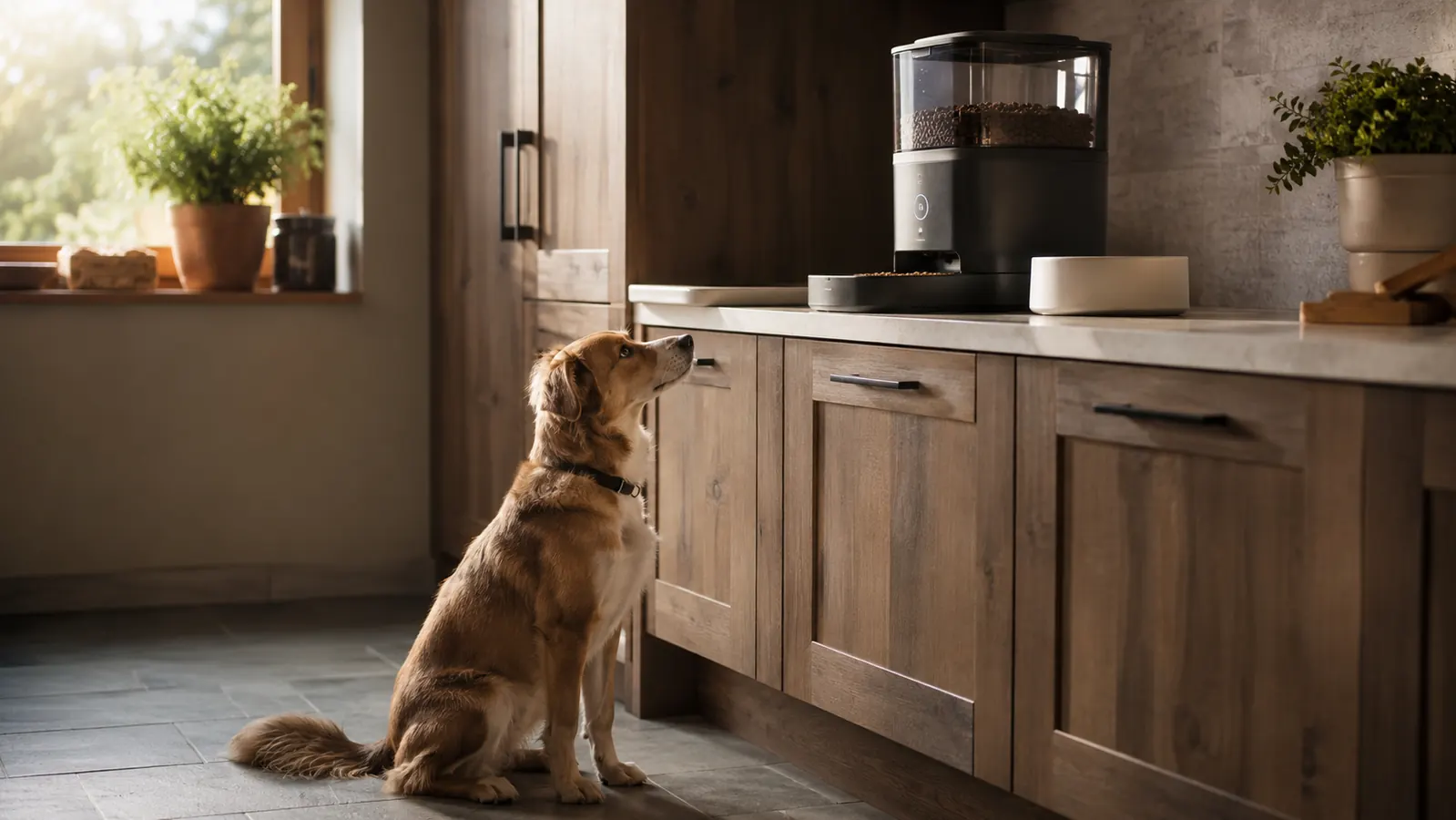
Here is the honest short version: if you are gone at mealtimes on a regular basis, or you are trying to stop a dog from inhaling food like it is a contest, an automatic feeder does something a bowl cannot do. It takes over the part of feeding that you keep forgetting. I ran the PetSafe Automatic Dog Feeder side by side with the old ceramic bowl I had used for years, and the whole experiment came down to two differences that actually mattered: portion control, and a schedule that held itself. Everything else, the bowl did just as well, and in a few ways it did better.
My setup might sound like yours. I have a 62-pound Lab mix named Duke who would eat until he made himself sick, and a cat named Pepper who treats every open bowl as a community buffet. For six weeks I fed Duke his breakfast and dinner through the PetSafe feeder while keeping his regular bowl in the kitchen, filled with the same kibble, so I could watch what each setup actually changed. I weighed portions with the same measuring cup on both sides, kept the same meal times, and wrote down what happened when real life happened: late nights, early meetings, and one day when nobody was home until eight at night.
| PetSafe Automatic Feeder | Regular Bowl | |
|---|---|---|
| Price | One purchase, plus a fresh set of batteries a few times a year | A bowl you likely already own, or a new one costs very little |
| Portion control | Dispenses a set amount per meal, programmed once | You scoop by eye, and it is easy to overfill |
| Mealtime schedule | Feeds at the same times every day, even when nobody is home | Meals only happen when someone is there to serve them |
| Reliability | Depends on batteries and clean, dry kibble with a consistent shape | Nothing to jam, nothing to charge, never stops working |
| Wet food | Dry kibble only | Handles wet food, toppers, and leftovers without a second thought |
| Daily effort | Needs programming, weekly cleaning, and the occasional battery swap | Fill it and go |
| Best for | Busy households that need a meal to happen on its own | Simple homes where someone is usually around at mealtimes |
Where the PetSafe Feeder Wins
The first surprise was how quickly Duke stopped hovering at my feet. With the bowl, he knew I was the food source, so every time I walked into the kitchen he was right there, tail going, hoping for an early dinner or a dropped crumb. The feeder broke that loop. Once he figured out that the unit on the counter was what made food appear, he started waiting near it at the right time instead of shadowing me all afternoon. For a dog who lives for food, that shift alone felt like the whole point of the upgrade.
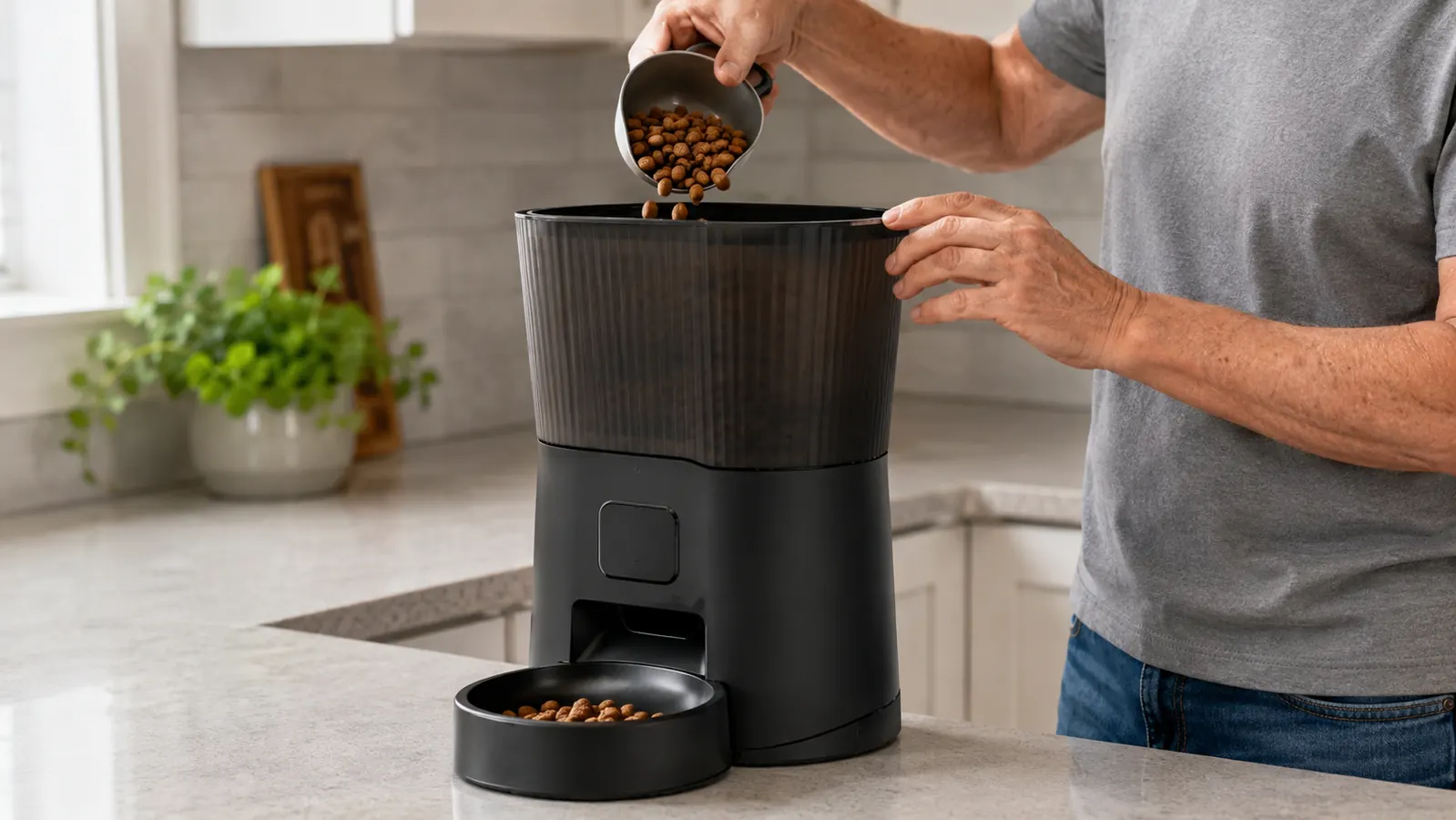
The bigger win was portion control. The PetSafe feeder holds about five meals of dry kibble in its 40-ounce hopper, and you program how much drops at each meal. Duke gets a cup and a half twice a day, and for the first time in years I did not have to stand there and guess whether I had overfilled the bowl. His weight held steady through the whole six weeks. If you have a dog on a diet, or two pets that need different amounts, this is the real reason to look at a feeder at all. The convenience is nice, but the measured meal is the part that actually changes your dog's health.
Where the Regular Bowl Wins
Now the part nobody puts on the box. A bowl cannot jam, and that matters more than it sounds. The PetSafe feeder runs on batteries and drops kibble through a rotating mechanism, and like any machine it has moods. If the kibble pieces are oddly shaped or dusty, a piece can bridge across the opening and stall a feed. It happened to me once, on a day when I was at work and Duke was staring at an empty bowl at six in the evening. He was fine, I fed him when I got home, but a plain bowl would never have needed a backup plan in the first place.
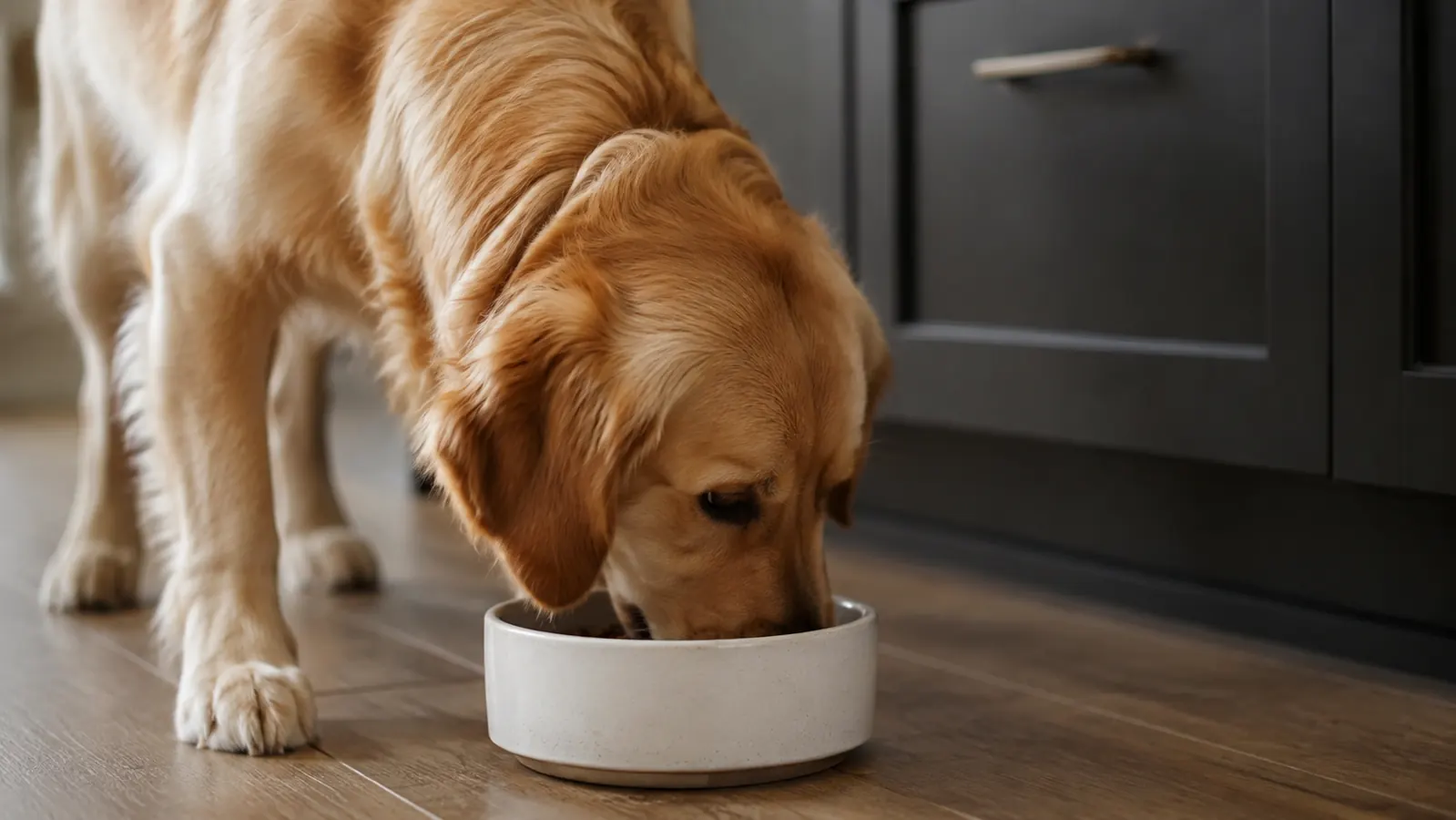
The bowl is also simpler in ways that add up over a month. No programming, no batteries to check, no manual to keep somewhere safe. It handles wet food, toppers, and leftovers, which the feeder cannot touch because it is built for dry kibble only. And when the dog is finished, you rinse the bowl in the sink and it is done. The feeder needs its hopper and lid washed on a schedule, and the rotating part wiped down, or kibble dust and oils build up and the whole thing starts to smell. That maintenance is not hard, but it is real, and it is a thing a bowl simply never asks of you.
If You Are Tired of Guessing at Portions, the PetSafe Feeder Is the One to Try
I have used the PetSafe Automatic Dog Feeder every day for six weeks and it has held up. It programs in under two minutes, holds about five meals, and feeds on time even when nobody is home. If that matches your week, check today's price on Amazon and decide whether the switch is worth it for your house.
Amazon Check Today's Price on Amazon →How I Tested Both
To keep this fair, I did not just set up the feeder and forget the bowl. I ran a real side-by-side. For the first three weeks, Duke ate from the bowl at seven in the morning and six at night, the exact times the feeder was programmed for, and I measured his portions with the same cup so both setups delivered the same amount of food. That part mattered, because the honest comparison is not feeder versus bowl, it is feeder versus me. A bowl fed on a perfect schedule with perfect portions does exactly the same job as the feeder. The question is whether you will keep up that routine without a machine forcing it.
The second three weeks, I let the feeder do the work and kept the bowl out only as a backup. I checked the hopper before bed, swapped in fresh batteries once when the low indicator lit up, and cleaned the hopper and lid every Sunday. I also watched Duke's behavior, not just his weight. The schedule the feeder kept was boring in the best way: breakfast at seven, dinner at six, no early feeds, no missed ones, no variation. That consistency is the whole product, and it is the one thing a bowl depends on you to supply.
Portion Control: The Biggest Difference
If you have a pet that eats like it is a contest, this is the section to read. A bowl has no opinion about how much food goes in it. You fill it, the dog eats, and if the dog is faster than your judgment, it eats too much. The PetSafe feeder changed that equation for Duke. Each programmed meal releases a set amount from the hopper, so the dog gets exactly what the schedule says, whether you are standing in the kitchen or sitting in a meeting across town. You pick the portion once, and the machine holds the line for you.
A bowl has no opinion about how much food goes in it. You fill it, the dog eats, and if the dog is faster than your judgment, it eats too much.
This is also where the feeder earns its keep in a multi-pet house. Pepper, my cat, is a grazer who would happily pick at Duke's bowl all day long. With the feeder, food only appears at meal times, and it appears in a unit she has not figured out how to open, so the kibble is gone before she realizes it is there. If your problem is a fast eater, a grazer, or two pets on different rations, the feeder gives you a lever a bowl does not have. You still have to pick the right portion, and you still have to check that the amount looks right for your dog's age and weight, but the machine takes the daily guesswork out of feeding.
Reliability and the Failure Modes Nobody Mentions
I want to be straight about this, because the reviews online bury it. An automatic feeder is a machine, and machines fail in ways bowls do not. The failure modes are mostly boring: a battery runs low, a piece of kibble bridges across the opening, or the mechanism gets sticky when the hopper has not been cleaned. None of it is dramatic, and all of it is easy to prevent once you know it exists. I had one jam in six weeks, and it was my fault as much as the feeder's. I had switched to a bag of kibble with larger, rounder pieces and did not think about how those pieces would sit in the hopper.
The protection against all of this is simple. Use dry kibble with a consistent shape, keep a spare set of batteries on the shelf, and wash the hopper and lid on a weekly schedule rather than a when-you-remember schedule. If you do those three things, the PetSafe feeder is quiet and dependable. If you do none of them, you will eventually get a meal that does not drop, and you will blame the feeder when the real problem was the dusty kibble or the dead battery. I have come to think of it like a coffee maker. It does a great job when you give it clean water and decent beans, and it is only a problem when you forget it needs looking after.
Cleaning, Batteries, and the Daily Effort
Let me give you the honest daily rhythm, because the brochures skip it. On a normal morning, I topped up the hopper every few days, pressed the button to check the settings once a week, and otherwise did nothing. That is the whole appeal. But there is a second rhythm underneath. The hopper lid lifts off for a wash in the sink, and the rotating piece underneath wipes down with a damp cloth. I did that every Sunday along with the rest of the kitchen chores, and it took about ten minutes. Skip that for three weeks and you will see why it is on the list: the plastic picks up a film of kibble oil, and the smell starts to hang around the unit.
Batteries are the other thing to plan for. The feeder runs on a set of AA batteries, and the low-battery indicator lights up well before the feeder stops, which is good. I got about five weeks out of one set, and I keep spares in the drawer right below the feeder so a swap takes thirty seconds. None of this is hard, and none of it is a reason to avoid the feeder. It is just a reason to go in with your eyes open. The bowl asks nothing of you. The feeder asks for a small weekly chore, and in exchange it feeds your pet on time, every time, which is a trade I made happily.
What I'd Tell a Friend
Here is the thing I say to friends who ask about mine, in the same words I would use sitting at the kitchen table. The feeder is not a replacement for being a good pet owner, and it is not a toy. It is a tool that removes one specific failure from your day: the meal that gets forgotten or the portion that gets overfilled. Start with the feeder and keep the bowl, the way I did. If the feeder fits your routine, you will know within two weeks, because the dog will stop hovering and the meals will just happen. If it does not fit, you have lost nothing but the time it took to program it, and the bowl is right there where you left it.
Who Should Buy Which
Here is my plain-spoken bottom line. Buy the automatic feeder if you work shifts or travel, if you simply cannot be in two places at dinner time, or if you have a dog that needs strict portion control, or a cat that steals the dog's food. It earns its place the first time it feeds the dog on a day when you physically could not. Skip it, and stay with a bowl, if you are home at every mealtime, if your pet eats wet food, or if you know yourself well enough to admit you will not keep up with the cleaning and the batteries. There is no shame in that answer. For a lot of homes, the bowl is the better tool, and the feeder is a gadget you do not need.
Still Not Sure? Start With the Feeder and Keep the Bowl
That is exactly what I did, and it is the low-pressure way to decide. The PetSafe feeder is easy to program, holds about five meals, and you always keep the old bowl as a backup. Check today's price on Amazon and see if it fits your routine.
Amazon Check Today's Price on Amazon →