
I will answer the question before anything else: a Litter Genie pail controls odor far better than a regular trash can, and if you scoop more than once a day or you live with more than one cat, it is worth the money. It is not a free upgrade, though. It costs more up front, it needs a refill cartridge every few weeks, and you still empty it, just less often. I ran both setups in our house for a year, in the same laundry room, so you do not have to guess. Here is what each one actually did.
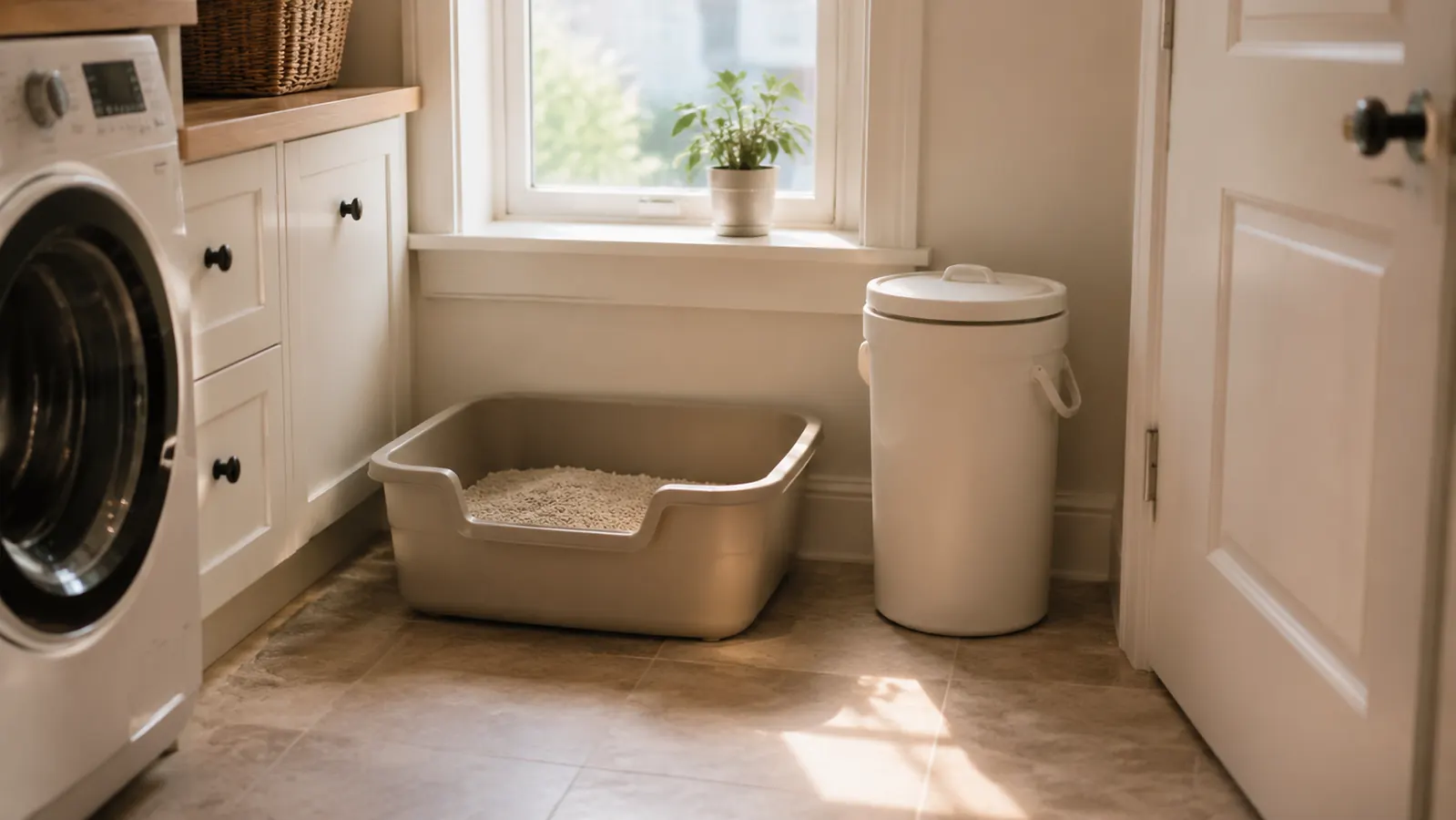
Our house has two cats, Clementine and Gus, and one litter box in the laundry room off the kitchen. For the first six months I scooped into the kitchen trash can, tied the bag, and carried it out every evening. For the next six I used the Litter Genie XL+ pail parked right beside the box. Same cats, same litter, same scooping routine. The only thing that changed was where the waste went, and the laundry room stopped smelling like a litter box.
How the Two Setups Actually Work
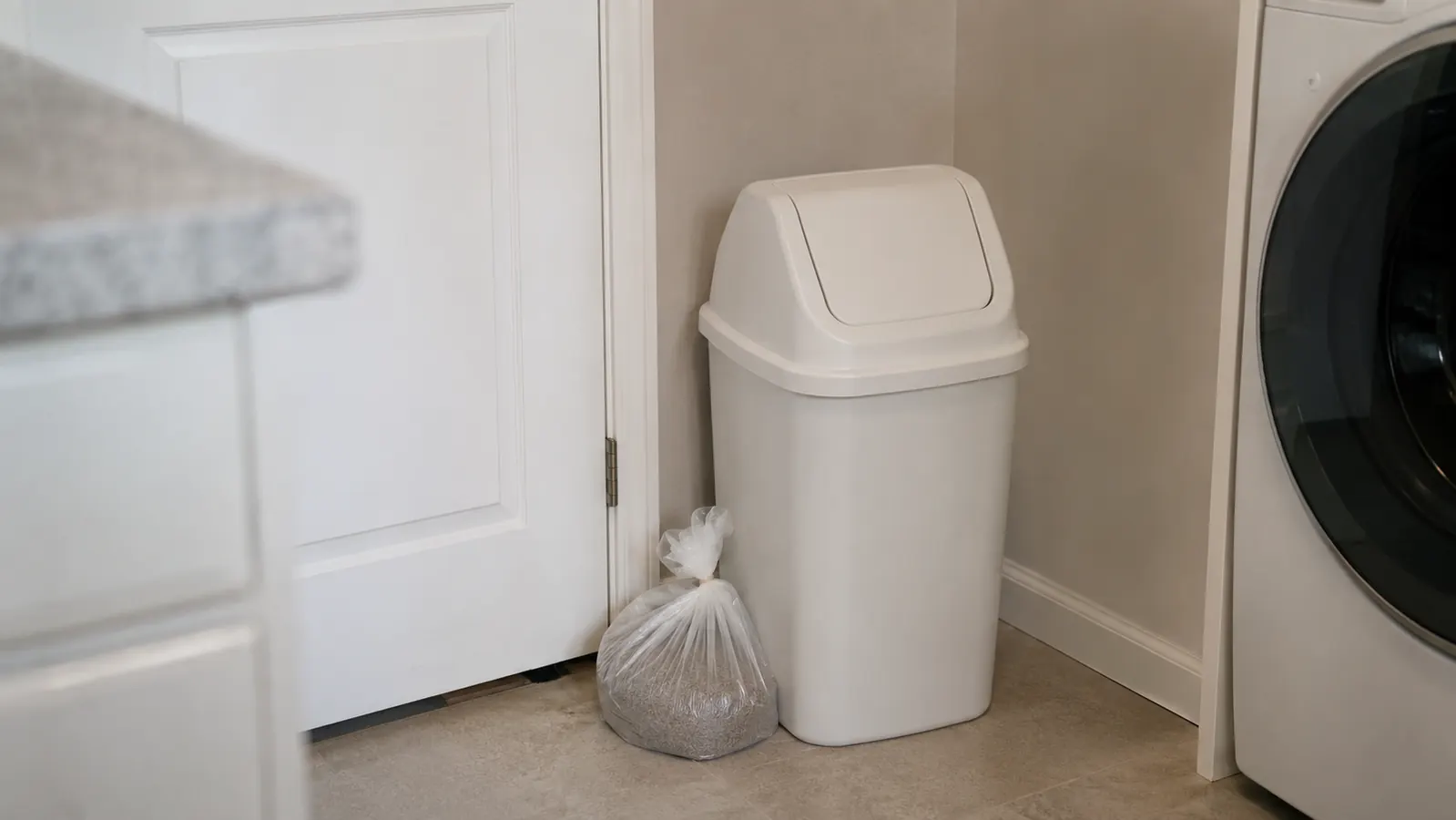
A plain trash can with a lid is simple, and I do not want to talk down to it, because it is a perfectly good way to handle cat waste. You scoop, you walk the clumps to the bin, you drop them in, and once a day or so you tie the bag and take it out. The lid hides the waste, but it does not seal it. The inside of the can is one big open space, so every time you open the lid you get a face full of everything that has landed in the last day or two. By day three the can smelled like a small farm, and by day five the whole laundry room did. If the can sits anywhere near where you live, that smell is a constant low-level background presence you stop noticing until a guest walks in.
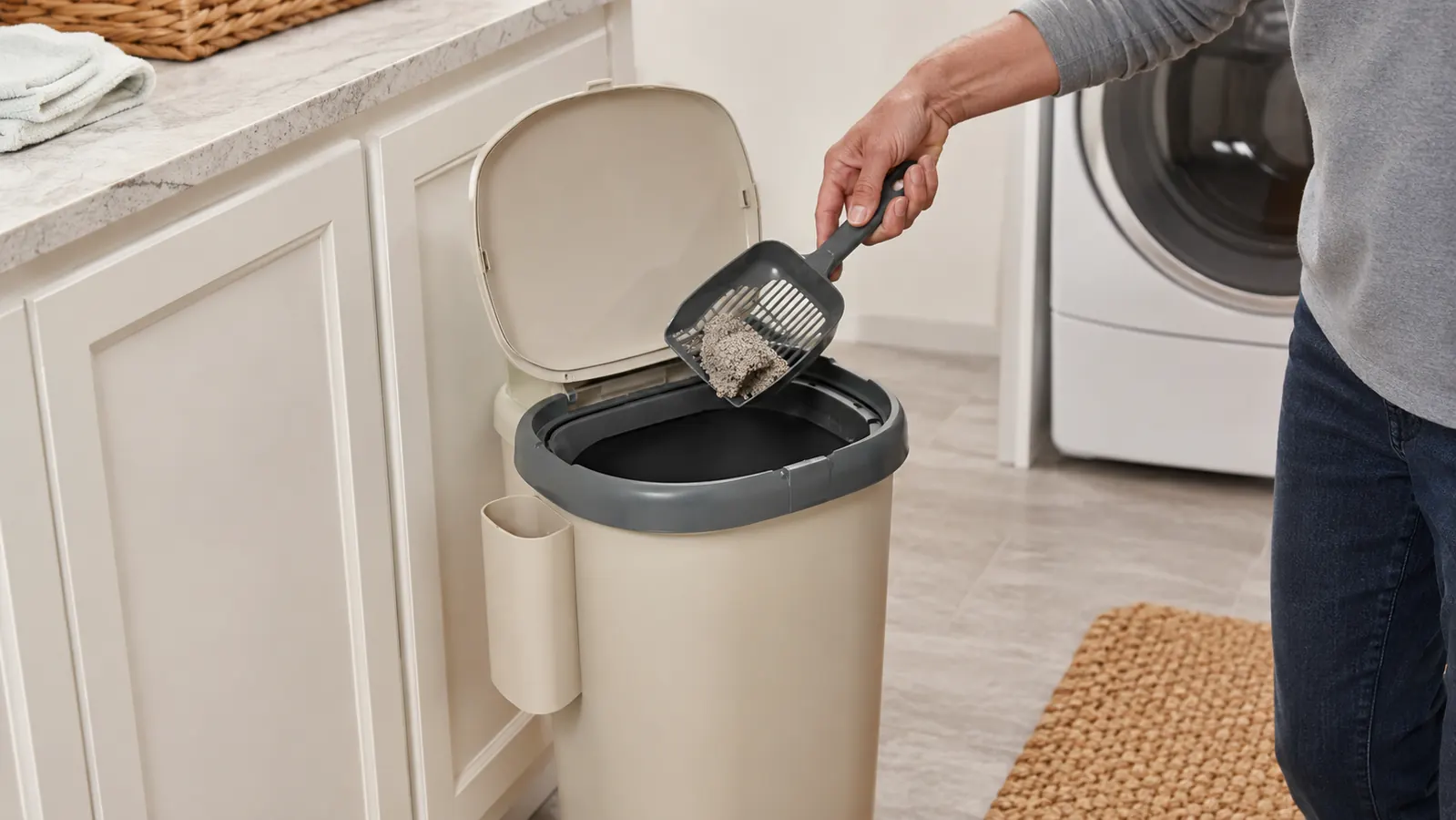
The Litter Genie works on a completely different idea. It is a pail with a trap door on top. You scoop, you open the door, you drop the clump into a long plastic bag that lines the inside, and the door snaps shut. The waste stacks up inside that bag in a sealed column, and a carbon filter in the lid scrubs whatever little odor escapes. The bag is a continuous tube, so there is no seam or joint where the smell can leak out. The only opening is the trap door, and it is shut the moment the scoop is in. When the column is full you pull the bag, tie it, and drop the whole thing in the trash. You are not storing waste in a big open space. You are storing it in a sealed tube, which is exactly the thing a trash can cannot do.
| Litter Genie XL+ Pail | Plain Trash Can with Lid | |
|---|---|---|
| Odor control | Trap door seals in each scoop, carbon filter scrubs what escapes | Lid hides the waste but does little as it sits and bakes |
| Upfront price | A one-time purchase, and you can check today's price on Amazon | You likely already own one, nothing extra to buy |
| Convenience | Sits beside the box, scoop, drop, done | Every scoop means a trip to the big bin |
| Ongoing cost | A Jumbo refill every few weeks, a recurring line item | Uses the same kitchen bags you already buy |
| Capacity | XL+ holds about two weeks for one cat, less for two | One big liner lasts far longer, fewer trips out |
| Emptying | Pull the bag, tie it, drop it in the trash, no heavy carry | Haul a bigger bag through the house every couple of days |
| Best for | Multi-cat homes and daily scoopers | Single cat, one scoop a day, no extra consumables |
Where the Litter Genie Wins
The odor control is the whole story, and it is real. With the trash can, the smell lived in the room. We just got used to it, the way you get used to your own house, until a visitor mentioned it and we remembered it was not normal. The Litter Genie traps each scoop behind a sealed door before the smell has anywhere to go, and the carbon filter catches the rest. Within a week of switching, the laundry room went from walk past and hold your breath to smelling like nothing at all.
It also changed the way we scoop, which surprised me. Because the pail sits right beside the box, there is no walk to the kitchen bin and no decision about whether to bother. The scoop, drop, close routine takes five seconds, and the waste disappears. With the trash can I would sometimes let the box go an extra half day because I did not want to make the trip or because the can was already full. With the pail, that excuse is gone, and a cleaner box is a happier cat. Clementine started using the box more consistently, and our vet said that is the knock-on effect she sees when people switch.
For the first time in a year, nobody who walked into the laundry room knew we had cats.
Where the Plain Trash Can Wins
I am not going to pretend the trash can is a bad option, because for a lot of households it is the sensible one. It costs nothing extra if you already own it, it uses the same bags you already buy, and it holds far more waste, so you empty it less often. For a single cat with one box and one scoop a day, tying off a small bag every couple of days and dropping it in the kitchen bin is a simple, cheap routine that works fine. My parents run exactly that setup, and their house does not smell.
The two places the trash can genuinely beat the Litter Genie were upfront cost and ongoing cost. The pail is a purchase you make once, and the Jumbo refill cartridges are a recurring purchase that lasts me a few weeks with two cats. That is not a fortune, but it is a repeat expense the trash can simply does not need. And because the pail compresses waste into that column, you still empty it regularly. It is not a set-and-forget gadget. If you hate buying consumables, that alone might push you back to the trash can.
Stop smelling the litter box every time you scoop
The Litter Genie XL+ traps each scoop behind a sealed trap door and scrubs the air with a carbon filter. It is the cheapest fix I found for a laundry room that constantly smelled like cats. Check today's price on Amazon.
Amazon Check Today's Price on Amazon →What It Really Costs to Run the Litter Genie
Let me put the numbers on the table so you can decide for yourself, without quoting a single sticker price. The XL+ pail is a one-time purchase, and it comes with a 24-foot Jumbo refill to get you started, which is the part people forget to budget for. A replacement Jumbo refill is a small line item, and you buy it a few times a year. With two cats and one box, I emptied the pail about every five to seven days, and one 24-foot refill lasted me roughly three to four weeks. So the first year costs the pail plus about a dozen refills, and every year after is just the refills. I set them on subscribe-and-save so I never run out, and today's price on Amazon is easy to check before you commit.
Compared with the trash can, which costs nothing to keep running, that is a real line item, and I am not going to wave it away. But put it next to what the trash can was costing us in other ways: a kitchen bin that smelled by midweek, a bag of litter clumps carried through the house every night, and the guilty knowledge that we were not scooping as often as we should. A year of refills costs less than one vet visit, and a cat that starts avoiding a dirty box is how urinary problems begin. That framing is why I stayed with the pail.
What the Owner Reviews Say
The XL+ carries a 4.5 out of 5 average across more than 2,100 Amazon reviews, which is a solid number for a product people handle every single day. The praise clusters around the same things I noticed: the pail actually contains the smell, the bag is easy to change, and the XL+ size means fewer empties. The complaints are consistent too, and worth reading before you buy. People mention the same sticky trap door, the occasional bag tear when it is overfilled, and a few who found the refills more expensive than they expected. Nothing in the reviews convinced me the trash can was the better choice. But the pattern is the same as mine: the pail is great at one thing, sealing the smell away, and every other complaint is a small nuisance around the edges.
One review pattern that stood out to me was how often people said the pail changed their scooping habits. Because it sits next to the box, scooping becomes a two-second job instead of a trip across the house, and several owners said their cats started using the box more reliably once it stayed cleaner. That is exactly what our vet told us when Clementine began going in more consistently. It is not on the spec sheet, and it does not show up in the star rating, but it is the reason I kept the pail after the six-month test.
What I Did Not Like About the Pail
No product this simple is perfect, and the Litter Genie has three annoyances worth naming so you are not surprised. The trap door gets sticky over time, especially when litter dust collects in the hinge, and you have to wipe it clean every couple of weeks or it starts to stick half open. The bag is tough but not indestructible: if you overstuff it, the top of the bag can tear when you pull it out, which is exactly the kind of mess this thing is supposed to prevent.
And the pail is taller than you expect, so it does not hide under a counter the way a low trash can does. It sat in the corner of our laundry room and it was plainly visible, which bothered me at first and then stopped mattering. None of these are dealbreakers, but they are the difference between a gadget that feels great and one that quietly annoys you six months in. I still recommend the pail. I just want you to go in with both eyes open.
Who Should Buy Which
Buy the Litter Genie if you have more than one cat, if you scoop every day, or if the litter box is anywhere near where people actually sit and eat. That last one is the reason we switched: our box is ten feet from the kitchen. A trash can that smells is a kitchen that smells, and no amount of scented bags fixes that. Multi-cat homes should get the XL+ for the extra capacity. Single-cat homes can buy the standard size and save a little on the purchase.
The honest middle ground is to try the pail and decide in the first two weeks. If it is not obviously better than the trash can by then, it probably will not get better, and you have not wasted much. For us the decision took about four days. If you have one cat, one box, and a waste spot that is not in the middle of the house, keep your money and keep using the trash can. You are not missing anything, and you will save the refill money for treats.
Three Tips That Made the Pail Work Better
Scoop twice a day, not once. The pail compresses waste, but it does not freeze it in time. Two quick scoops a day keeps the box cleaner and spreads the load across the week, so the pail smells less when you open it and the bag lasts longer. This was the single biggest change for us, and it is free.
Let the bag fill, then pull it. The bag is designed to be used until the column is nearly full. If you tie it off early because you are squeamish about a full bag, you will go through refills twice as fast. The odor stays inside the bag, so a full bag does not smell any worse than a half-full one until you tie it and take it out.
Replace the carbon filter every couple of months. The filter sits in the lid and does real work. I replaced ours after about two months and the difference was noticeable, which surprised me. Refills and filters are a small recurring cost, and they are the whole reason the pail keeps working, so do not skip them to save a little.
If your litter room smells, start here
I used the Litter Genie XL+ for six months and it is the single change that fixed our laundry room. Multi-cat homes get the XL+, single-cat homes can size down and save. Check today's price on Amazon.
Amazon Check Today's Price on Amazon →